
NEWS
Roxbury School Hears Police Ideas
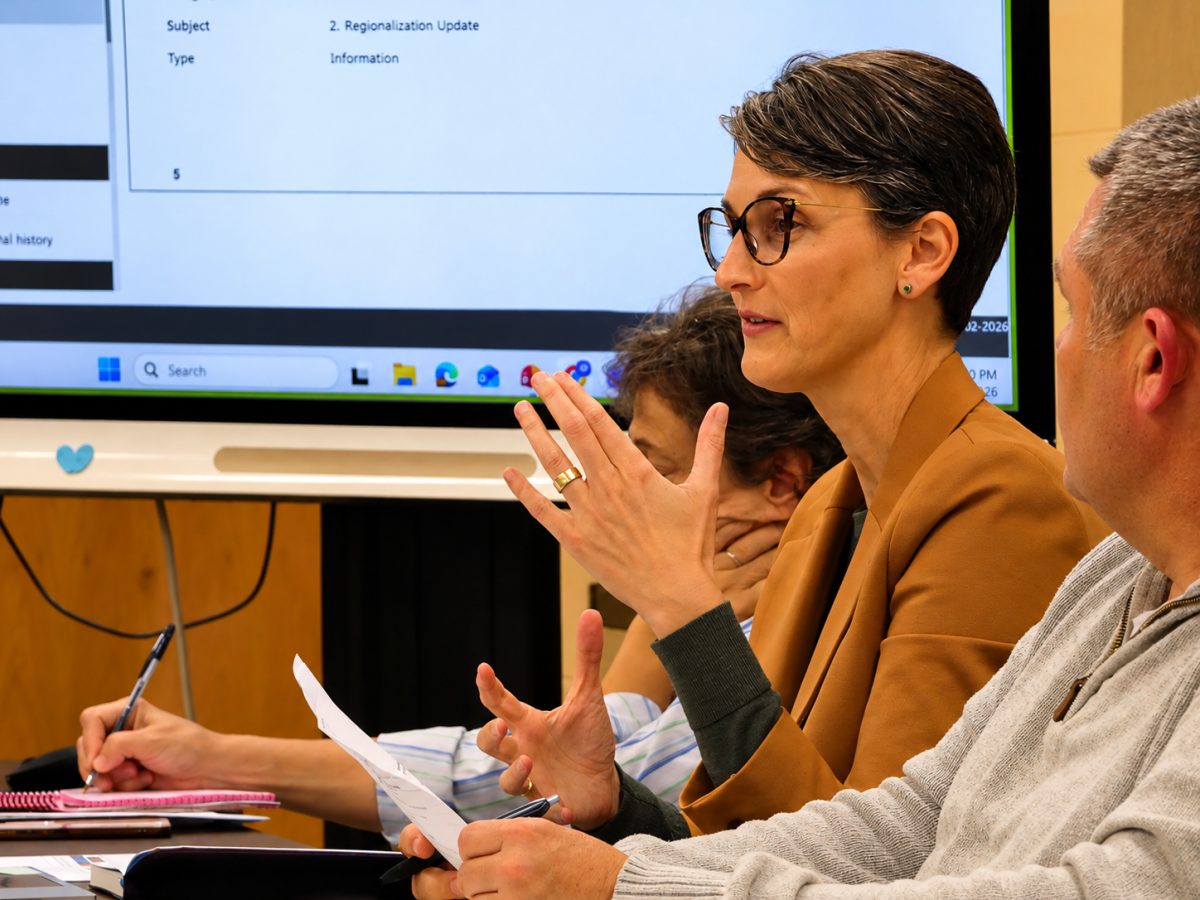
ROXBURY — Before last week’s monthly regular Roxbury Central School Board Meeting, the members took a tour of the entire school to review any issues that might exist, as planned last month.
The Treasurer's report was given with the mention from the President of the board, Edward Fersch that it contains all the information that is usually given and that there are still "outstanding checks." The extracurricular activities report was that it is early in the year, and was "the calm before the storm," (in that the extracurricular activities would start soon.)
After the minutes from the last meeting were approved, the President's report started with the NYSSBA Resolutions. NYSSBA is the New York State School Boards Association. a membership organization representing public boards of education and Boards of Cooperative Educational Services BOCES). The day after the board meeting this month, will be the annual meeting of the NYSSBA, where every district has the opportunity to appoint a delegate. Edward Fersch has been the delegate, and has provided the school board members with a booklet containing the resolutions, "which is the way NYSSBA drives its advocacy during the year." Fersch explained that the first five were self-explanatory changes to bylaws, and that the next few sunset after five years, and as some face sunsetting , they are coming up to be continued. He noted that there was a theme to this year's resolutions, a concern about "charter schools typically lasting up to five years ." Charter schools are independently run, tuition-free public schools that operate under a time-limited performance contract or charter.
Among the concerns are whether the directors have to be state residents and how the schools get their money. "There is a theme about health insurance," also a concern regarding the HVAC (Heating, Ventilation, and Air Conditioning systems) Bond Act, providing funds when schools are upgrading their HVAC systems. President Fersch directed the Board's attention to Resolution 12, a concern about young students having computer based testing as young as 3rd grade. Fersch points out that it would mean students having to learn to use laptops in K - 2nd grade. The resolution would provide an option that schools could choose to not use computer based testing. Resolution 24 concerns transportation aid,. The school gets aid to bring children to and from school, but not to sporting events. The resolution holds that sporting events are part of the educational experience and should be able to access state aid for the cost of transportation to them as well. President Fersch reminds the Board that these resolutions are areas of advocacy and they do not compel the state to listen or act on them.
Next, President Fersch presented three Board Goals he had drafted. He pointed out that there is a difference between board goals and district goals. Board goals are "what the board wishes to accomplish as a board and they may not be in line with the things which need to be accomplished in the district." The first one is to study the long term educational and fiscal stability of the district. He proposes that there be a committee to look into and present a preliminary report in February. The second goal is to develop charters for the boards' standing committees. The charter explains what the committee's responsibilities are, and give the parameters for approval. He proposes one or two board members work on creating this. He asked board member Dr. Deborah Fox to work on this and she has agreed. The third is to work with administration and technology teams to improve video conferencing for board meetings. The last item on the President's report was to propose a board retreat to discuss board responsibilities and protocols, to be held before the December meeting.
Superintendent Dr. Stacy Ward's report began with a planned sign for the parking lot, that the general public cannot park there during school hours and during snow emergencies. The wording will be "Parking for school business during school hours, no overnight parking Nov. - April. Next she reported on a regionalization update from ONC BOSES (Otsego Northern Catskills Board of Cooperative Educational Services). There was a Board of Education Superintendents communication training at SUNY ULSTER which gave guidance on approaching the issues of educational and fiscal stability. "How do we lead with courage, some of the tenets of this process are to: Listen for understandings, speak from the heart, suspend certainty, hold space for difference, and slow down the conversations." Reporting on the "Better Together Presentation," Superintendent Ward has been working with Dr. Catherine "Catie" Huber, Dr. Jennifer Avery, from Jefferson and Kortright, Dr. Tarkan Ceng, Bonnie Johnson of Gilboa. They were asked to do a follow up presentation, which they titled "Rural Schools." They attended NYSCOSS ( the New York State Council of School Superintendents) training, and have been asked to come back to the rural schools winter conference in December to report on what they have been doing since the last conference.
Dr. Ward delivered a Strategic Plan Update, where she stated that the biggest gains have been in attendance. Superintendent Ward acknowledged school nurse Rachel Brandow, that she and other school functionaries named have been improving attendance through such plans as a daily report of how many students come in late or leave early which is sent out to parents on an app, and is interactive with the parents of the student. Superintendent Ward then gave a report on the progress towards acquiring an SRO, (School Resource Officer) who will focus on physical security. She is consulting Akshar Consulting, LLC, who provide such services. They generally employ retired law enforcement officers and former military. The SRO is not the school disciplinarian and should not be involved with day to day school discipline issues. The SRO keeps the building and people safe. In emergencies the SRO would be a liaison between the school community and law enforcement should there be a criminal event. There has been a proposal to share a part time SRO with Margaretville, who also use Akshar Consulting. But, at present the funds are not available for this eventuality. It may be put before the budget committee for next year. Last year, for a specific event, the school employed Akshar to a very good result.
Principal Timothy Joedicke, delivered the Curriculum and Instruction update. The fourth grade has been awarded two grants, the Watershed Council Agricultural Green Connection grant. Principal Joedicke recognizes the hard work of Barb Smith in obtaining these grants. In the Green Connection grant, the 4th grade connects with a 4th grade group down in NYC, as pen pals. They discuss environmental and forestry issues. They have had input from Hanford Mills. The Roxbury students will go to NYC and the NYC students will come to Roxbury. The bus charter will be funded by Watershed. The second grant is from Catskill Watership, to raise trout and release them. The Portrait of a Graduate Program, ONC BOSES is giving some guidance on the way forward in this program. More information is becoming available through New York Inspired, the government aspect of the Portrait of a Graduate Program (POG). The POG program shifts the evaluation of a high school student' s educational completion away from the standardized testing and onto an evaluation of the student's real life skills acquired in school. The next step in developing this program is to create curriculum.
The State wants schools to create a report on assessments by which students are being evaluated, tested etc., to answer the question is this an adequate way of assessing the children's progress. They are to build programs around the methods of assessment for the POG program. ONC BOSES is helping to move this process forward, making up for the pace of assistance from New York Inspired, which is to some degree lacking. Regents exams "are not going away but [the state] is seeking to decouple them from diploma requirements. So Regents will be a pathway to graduation." The Elementary concert will be changed from evening to 1:30 in the afternoon. They are looking into how the concert may be recorded. This would be the concert for pre-K to 6th grade. The numbers for comparison between athletes from Roxbury and Gilboa were passed around. They showed the statistics for fall sports between Roxbury and Gilboa, as the schools' sports teams are combined due to the size of the two schools. Varsity Boys Soccer - 17 players, 7 from Roxbury, 10 from Gilboa; Junior Varsity boys soccer, 15 total, 7 from Roxbury , 8 from Gilboa; Modified Boys soccer 16 total, Roxbury 8, Gilboa 8; Varsity Girls soccer, total of 25 from 13, from Roxbury 12 from Gilboa; Girls Modified Soccer, 21 total, 13 from Roxbury, 8 from Gilboa; Golf total 8, 8 from Roxbury. The number of Roxbury students taking College credit courses in High School is continuing to grow. There are 19 students taking college courses and they are receiving 144 college credits between them. Most are SUNY credits which will transfer when the students go on to college.
A parent was concerned that his son, who is doing independent study, overseen by a teacher, is not getting graded for his gym class, but rather it is the policy for students in independent study to receive a pass/ fail evaluation. The student has a teacher overseeing him and a syllabus that needs to be handed in. His father asks that the board reconsider this and grade him for his efforts and achievement and have it reflected in his grade point average. Another observer asked how many special ed teachers there are in the elementary school. Dr. Ward is going to provide her with the number. She further asks about winter school bus routes. Board President Fersch informs her that the school is "down" one bus driver due to a resignation and hopes applicants may apply for the job. She ends with her concern that the change in the elementary school concert from evening to 1:30 PM will cause parents to have to take time off work to hear their children in concert.