One hundred and fifty years ago, along the Ulster Delaware Turnpike, before it was to become Route 28, lines of men called Gandy Dancers laid down wooden ties, crushed rock ballast and rails. They inched the rails into place. Soon after, they would straighten those same rails. The rails would be constantly pushed out of line by the immense crushing weight of trains rumbling over them. They tapped the rails into exacting position relative to the other rails, their long steel bars ringing in the mountain air. To keep the workers all tapping in unison, they sangs songs such as one preserved by the great Leadbelly:
Ho, boys, is you right?
I done got right
All I hate about linin' track
These ol' bars 'bout to bust my back
Chorus:
Ho, boys, cancha line 'em –track
Ho, boys, cancha line 'em -track
Ho, boys, cancha line 'em -track
Here we go linin track
If I could I surely would
Stand on the rock where Moses stood
Ho, boys, cancha line 'em –track
Ho, boys, cancha line 'em –tracka lack
Ho, boys, cancha line 'em –tracka lack
Here we go linin track
Many sources give the expression Gandy Dancer a wonderful etymology. They say that the steel tools used to work on the tracks were made by the Gandy company and dancing was the swaying movement of many men in unison to carry the rail to its place on the ties. Not to ruin a good story, there is no record of there ever being a tool company by the name of "Gandy." Rather an alternative theory is that the swaying step of the rail carriers was goose-like, "Gander dancers" became "Gandy Dancers." Wherever this wonderful word originates, it still is used to describe the flesh and blood component of rail maintenance. Today, if you get up early on the right day, you can still see Gandy Dancers at work on the rail lines.
It is dawn in Arkville and a mix of mist and rain. The clouds are blazing gold and orange as the sun begins to rise. The railyard is empty but soon a small crew will arrive to do heavy work. The rails are, in truth, moving parts on a railroad, and must be constantly maintained, to make sure they only move a small amount as thousands of tons of train roll over them. "It never occurred to me until I owned a railroad," Todd Pascarella says. "They are fluid, they move."
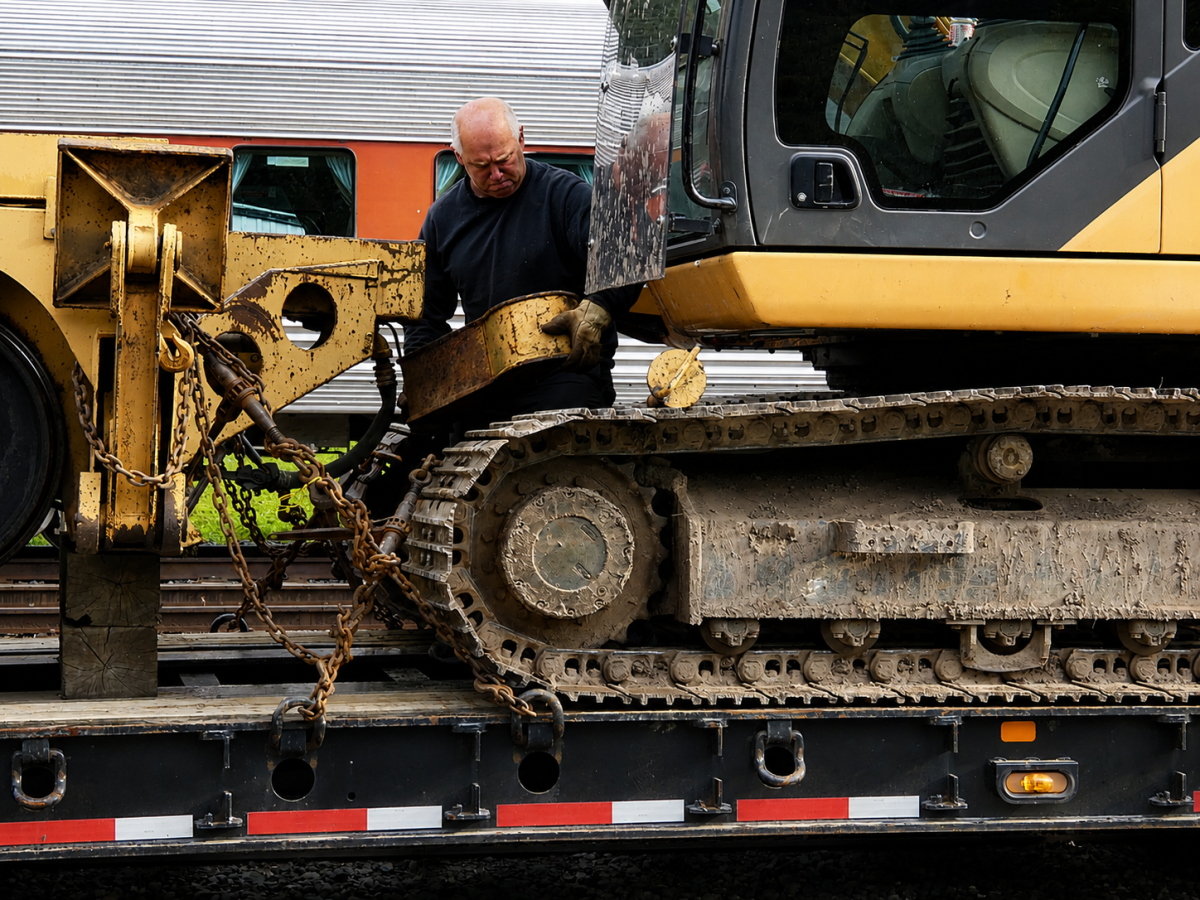
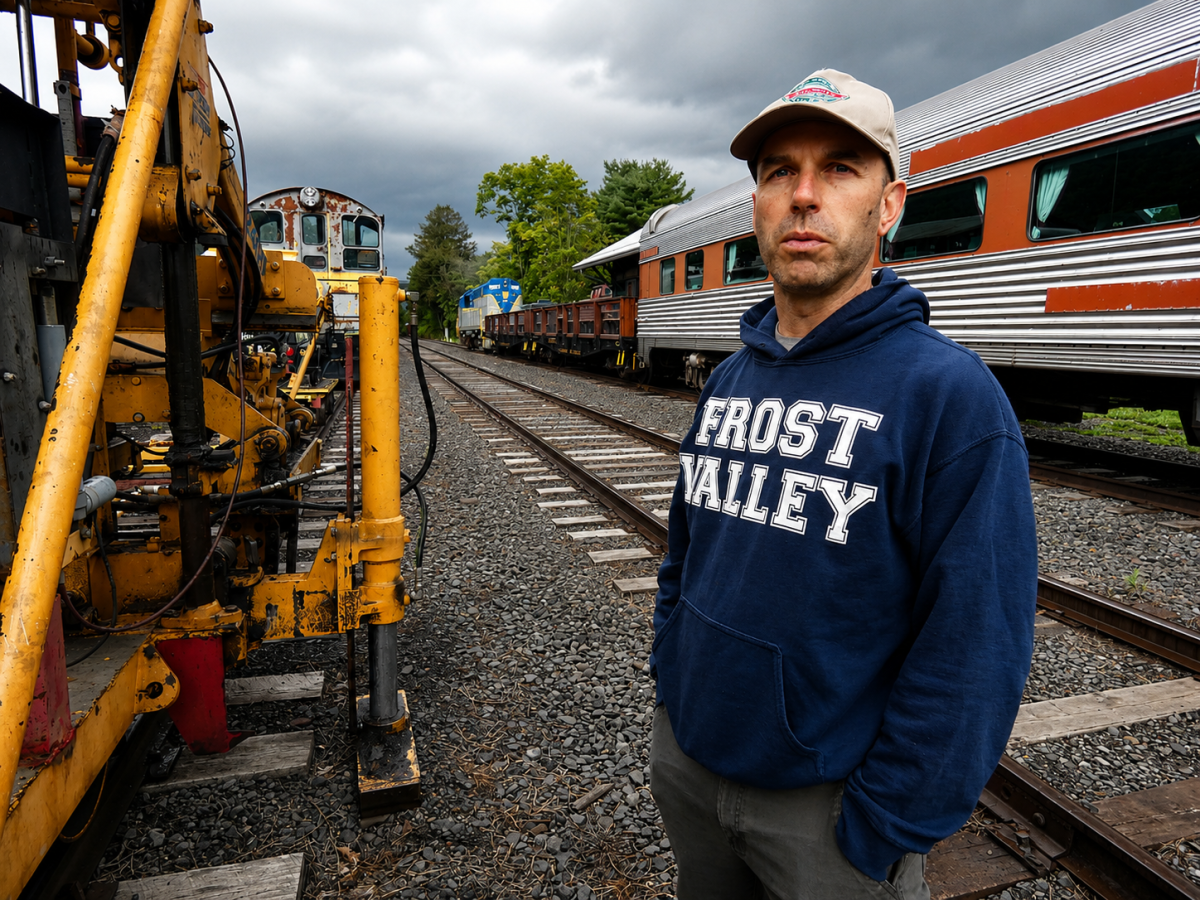
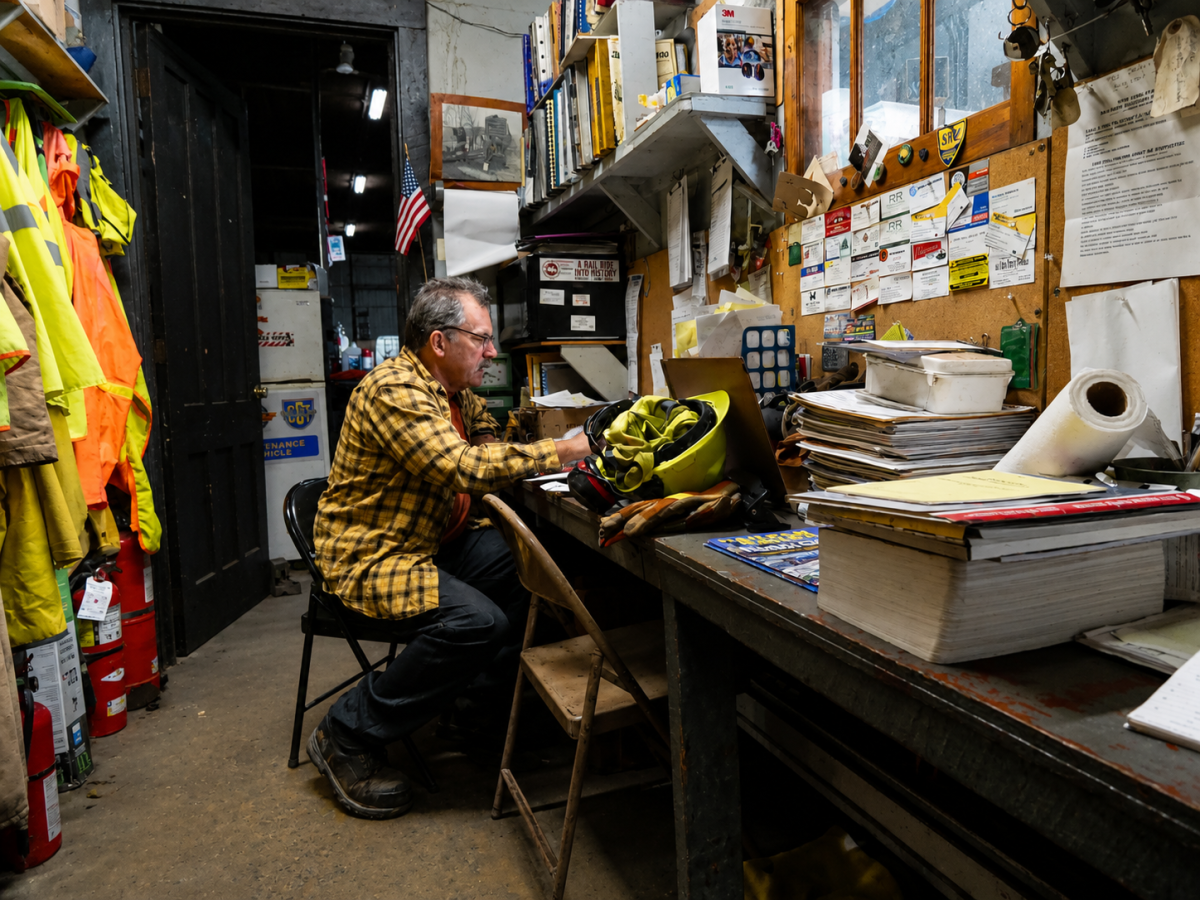
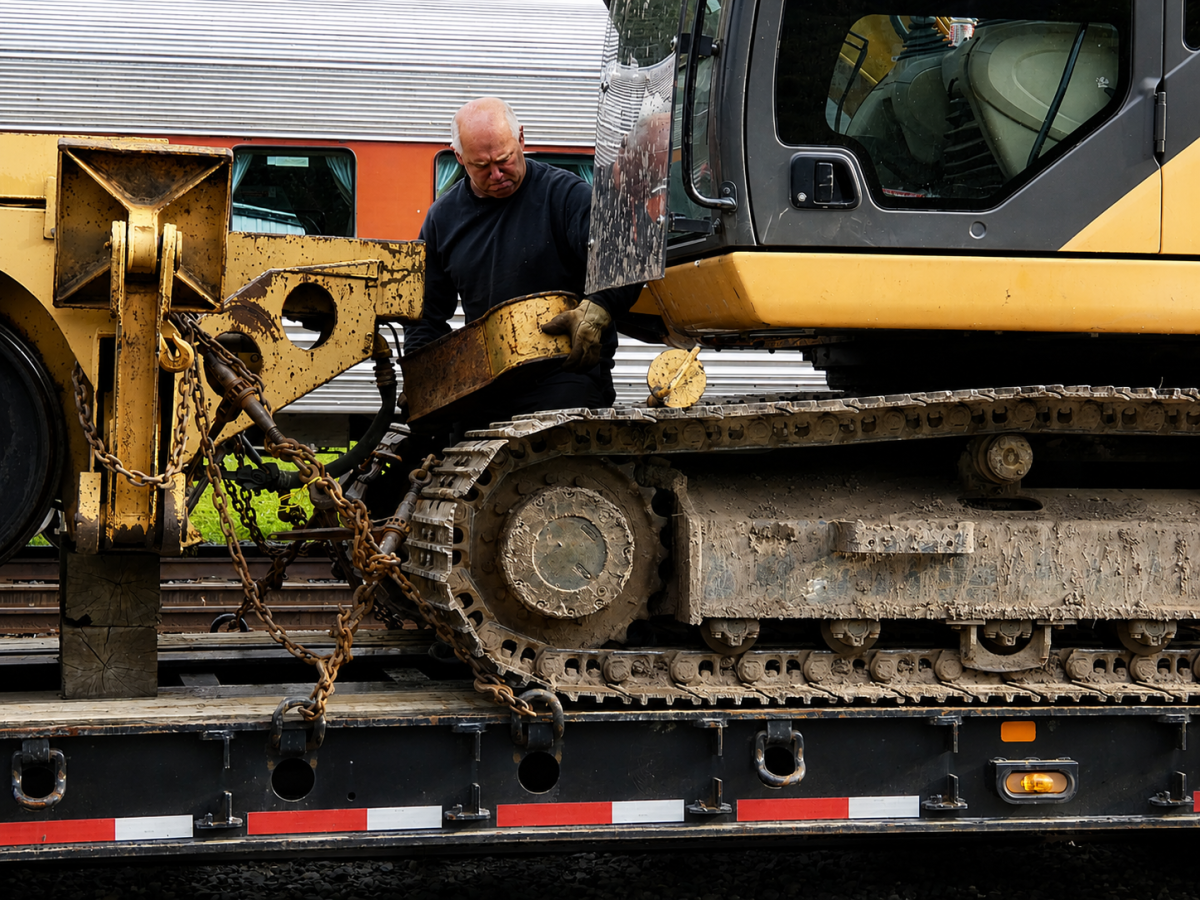
Scott Symans, John Marino, Vic Stevens arrive as does Todd Pascarella. I should point out that Todd does more than raise funds and shake hands. He has pried his share of railway spikes out of ties that must be replaced. Scott is here to take a piece of very heavy machinery up to Buffalo, New York. John and Vic are here to carry on the never ending job of upkeeping and even improving the track.
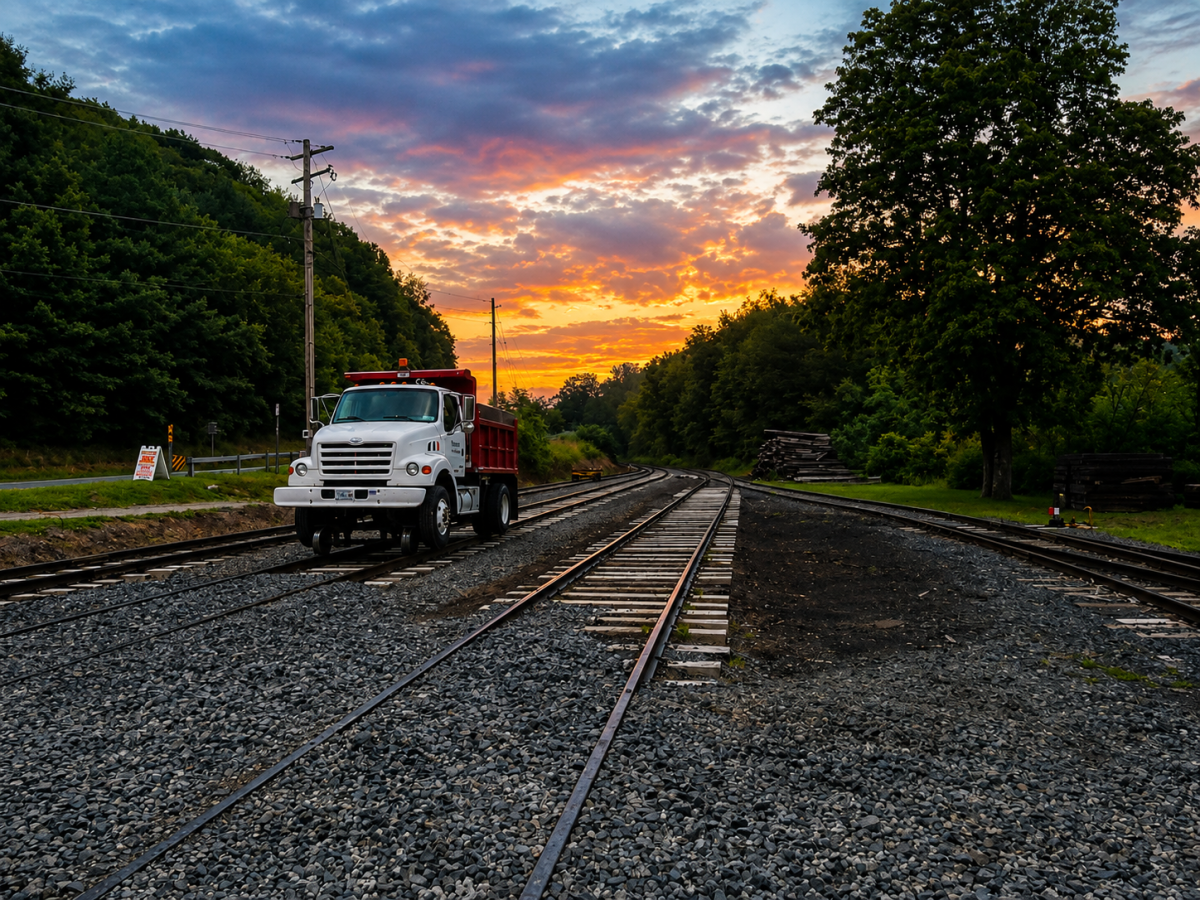
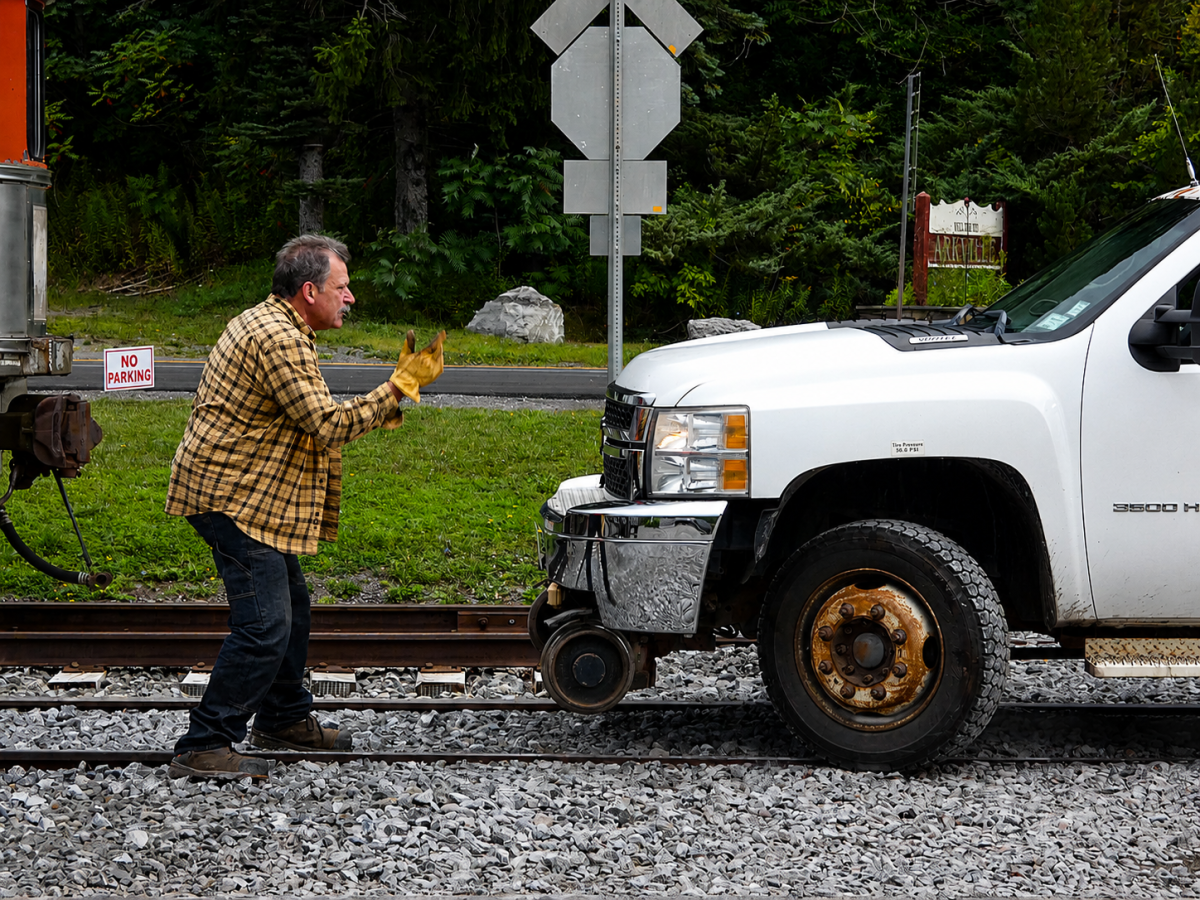
Scott Symans bought a small locomotive, and restored it years ago. John Marino is from Kingston, and formerly of the Kingston Railway. Vic Stevens is from Hobart, where the train tracks ran through his backyard as a kid. Railroading is in their blood. Vic is going to drive me along the tracks to the east and west of the station in Arkville in a "hi-rail truck." This is a regular truck in most ways, other than two sets of steel railroad wheels that can be lowered to hold the truck onto the railroad track.
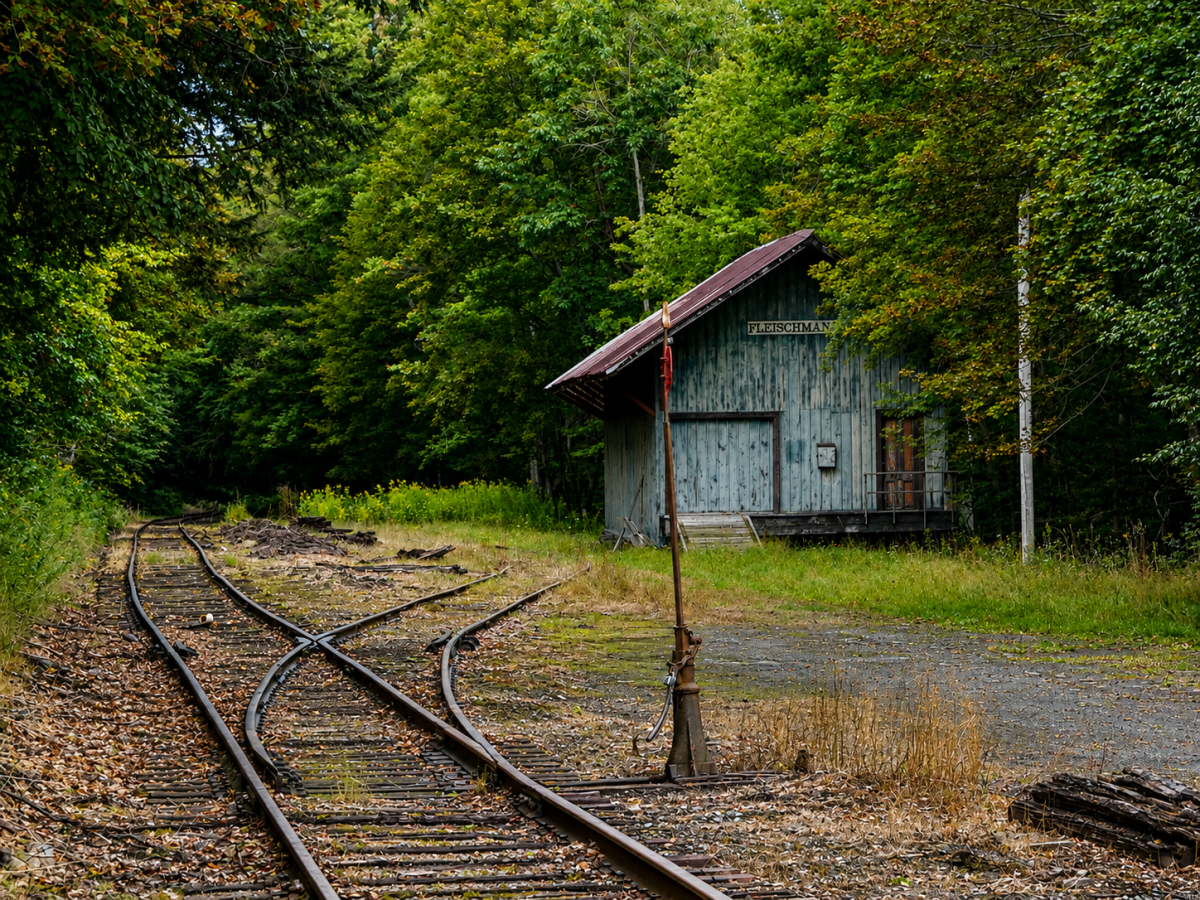
The Delaware & Ulster Railroad has been running east from its embarkation point for a number of years now. However, there is a beautiful right of way going North West to Halcottsville. For my flatlander readers, when you come here to visit , ask about a visit to "Hock-ut-ville." It is an off the beaten track little village that time has passed by. Someday soon, because of the work of Todd, Vic, John and Scott, the train won't pass it by for long. Todd is actively seeking funding to keep the track work heading to Halcottsville, and one day even Roxbury. Remember the movie line from "The Right Stuff", "no bucks, no Buck Rogers?" That goes for trains as well as rocketships. "It always just comes down to time and money," Todd says looking down the tracks. "If somehow we get a bag of money dropped down on us, and a bag of time, then we'll get it going."
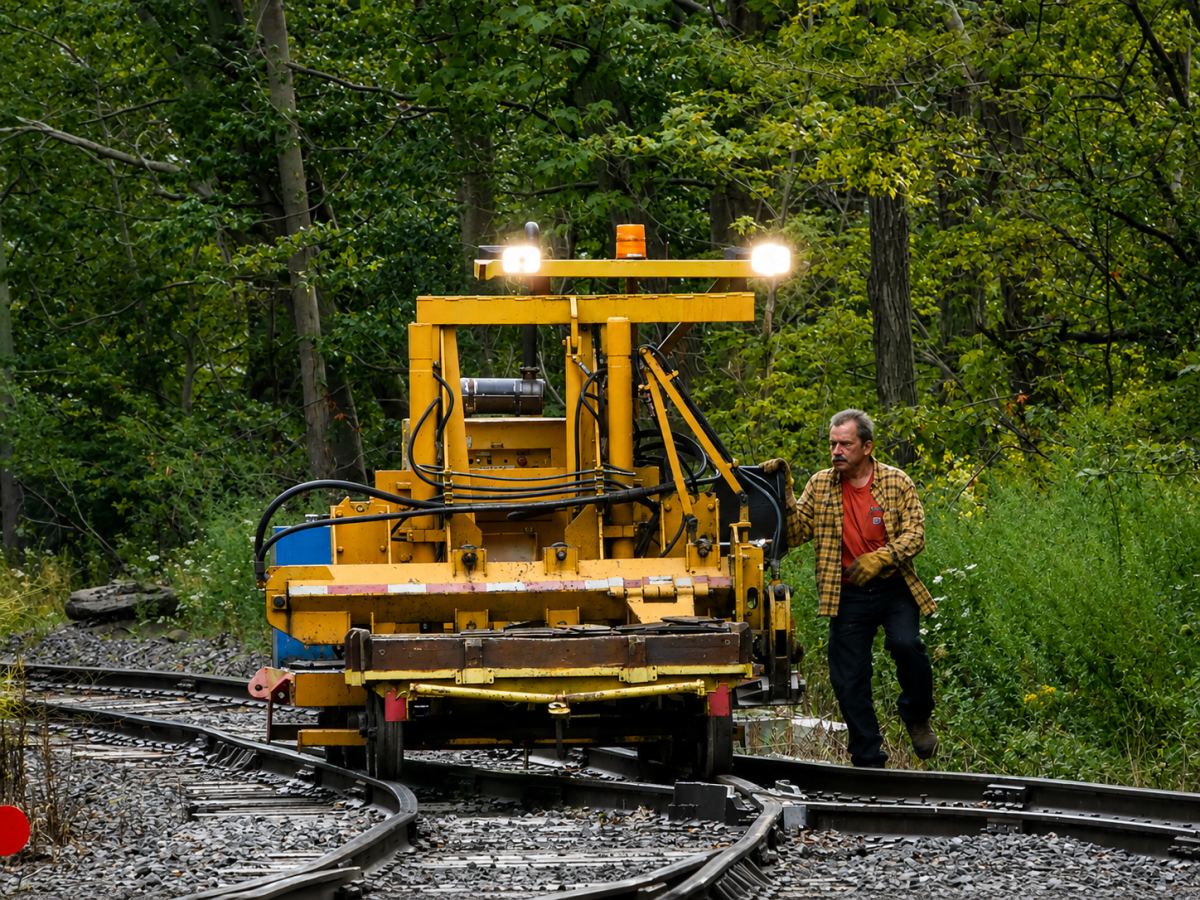
The money that does come into the railroad these days goes to maintain old and specialized equipment. Like the men who maintain the tracks and the equipment, those machines do hard work, mostly by hydraulic power. When the railroad was first laid down, one hundred and fifty years ago, trackwork was done by teams of Gandy Dancers. They put down wooden ties, on leveled track bed, raking out track ballast, the crushed rock between the ties, laying out rail, placing single shoulder tie plates down, and driving two dog spikes through the tie plate into the wooden tie. Today, this is done by huge machines run by computer, often laying down concrete ties or compressed recycled plastic ties. Here on the Arkville line, the system sits between those two extremes. There are still Gandy Dancers, but the huge teams are replaced by several men with vintage powerful machines. These machines travel along the track in a specific order to perform a choreographed performance, replacing the team of workers of past railroad work. The tie crane picks up the ties and stacks them on a cart that it pulls down the tracks to the site of the tie to be replaced. Its hydraulic arm places the tie beside the track in line with the space where another machine, "the inserter", can only move the tie at a ninety degree angle to the track. It picks up the tie and forces it into the gap under the rails. It then presses the ballast stones into place, while lights on the machine measure any deviation in the alignment of the rails. Another machine, called predictably, "the spiker" comes in and drives the spikes into the tie plates securing the rails. There is still a lot of muscle and hand work pulling spikes. They come out easily when the wood is rotted through, but that isn't always the case.
The parts for these very old machines are not easy to find. Often, the parts are made in the workshop of the engine house. However, if it is a complicated piece. the railroad relies on ROMO metal fabrication in Andes.
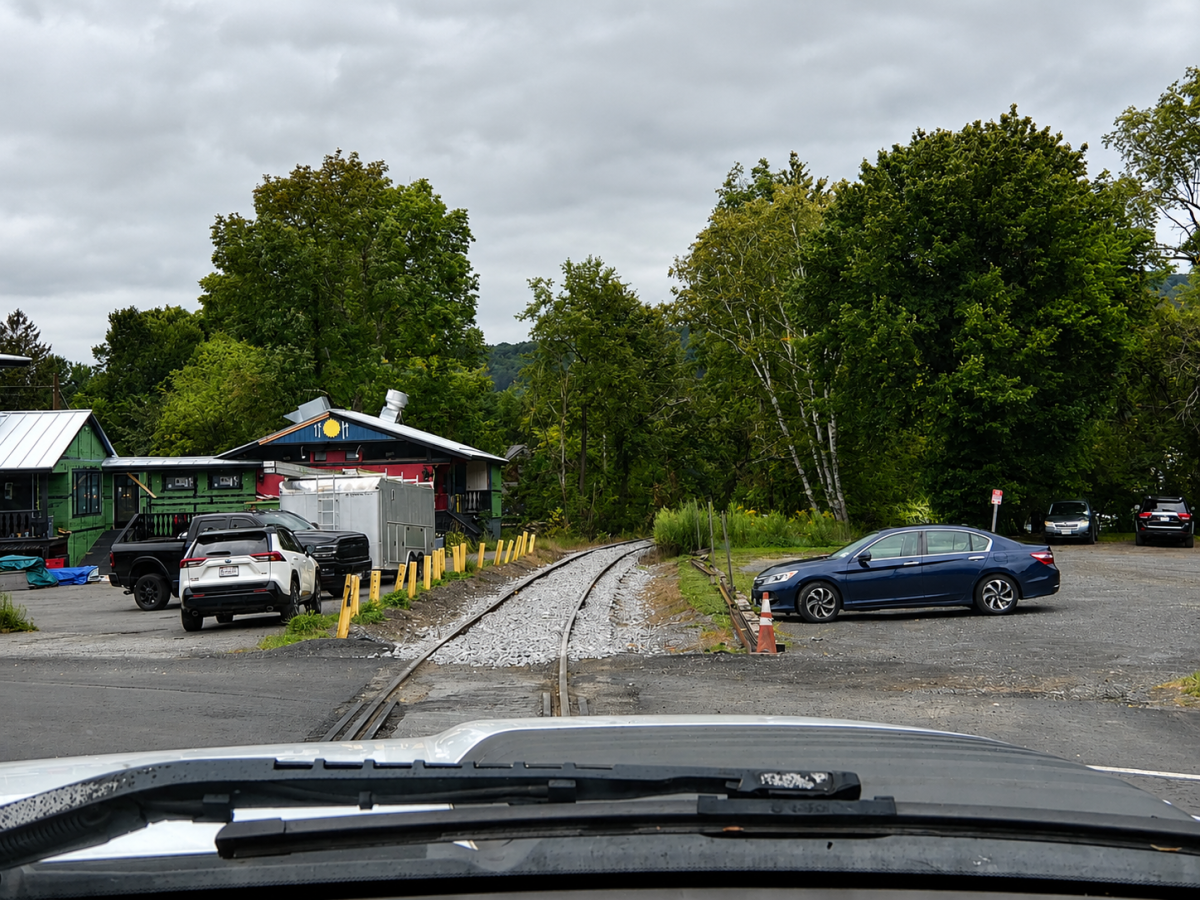
A few years ago, each oak tie cost $25, Vic tells me as we drive over freshly restored and even brand new track. "Today a railroad tie costs $65 each." Think of that when you see those 3,250 ties, blur past every mile a train travels. But if the track is maintained those ties will last a good long time. Vic explains that they must not lie in standing water. So it is necessary to maintain the drainage on either side of the track. The work is constant to clear brush and keep the track bed draining the water that defines our region.
Railroad is vital. You begin to understand how important maintaining track is, when you consider that there is no better way to move the heaviest things we Americans make. There used to be track from Kingston to Arkville. Today there is a stretch used by the Kingston Railroad for tourist trains. Then there is hiking path on what used to be track. Then there is a stretch where a company rents seats on pedal cars which ride on the tracks. Then there is hiking path and unkept track. Then at last, there is the Delaware & Ulster Railroad. Suppose someone gives the gift of rolling stock or an historic engine to the railroad. A train engine is too heavy to be allowed to be trucked on a highway. So, the engine must be disassembled and rebuilt in Arkville. The free gift of an engine now costs hundreds of thousands of dollars simply because it can't roll over rails to its destination. Trains once could move anything, just about anywhere in the USA. "When track comes up, it never comes down again," says Vic sadly as we drive over the tracks for which he and his fellows lovingly care.
This may be a good time to poke those businesses north west of Arkville that may want hundreds of happy tourists dropped on their doorsteps on Saturday afternoons. That bag of money may be a good investment if dropped on the Delaware & Ulster Railroad.