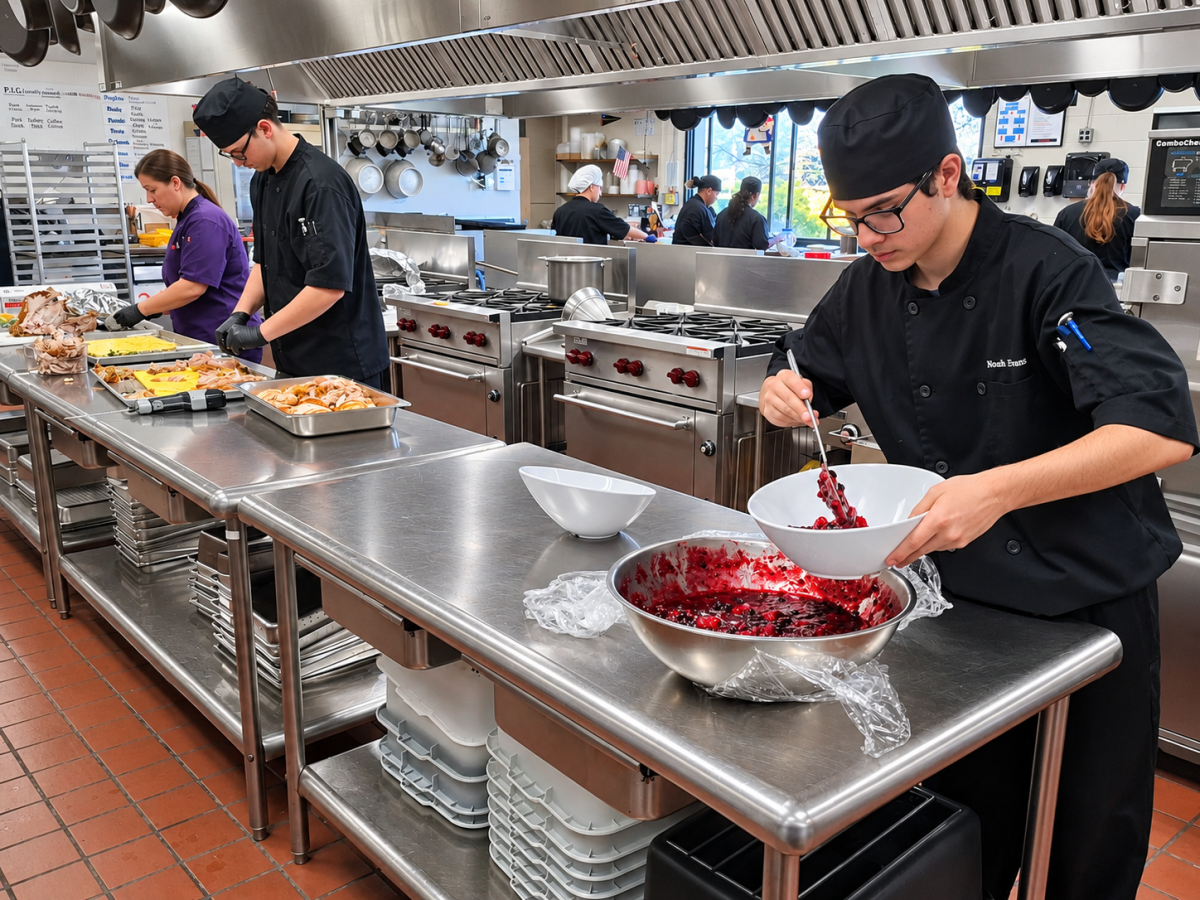
GRAND GORGE— I had the great joy of witnessing how ONC BOCES and Jody Albano are creating the next great chefs of the someday to be Catskills restaurants this week.
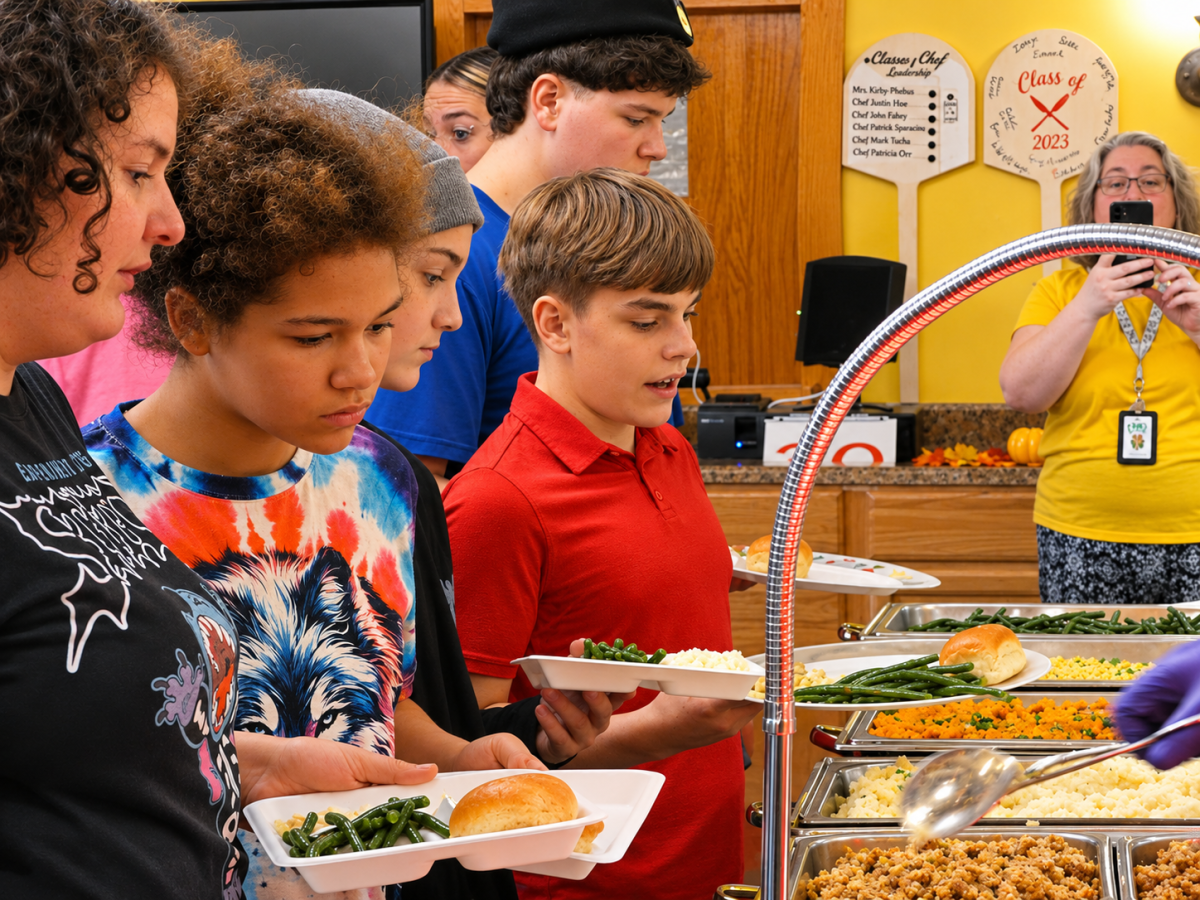
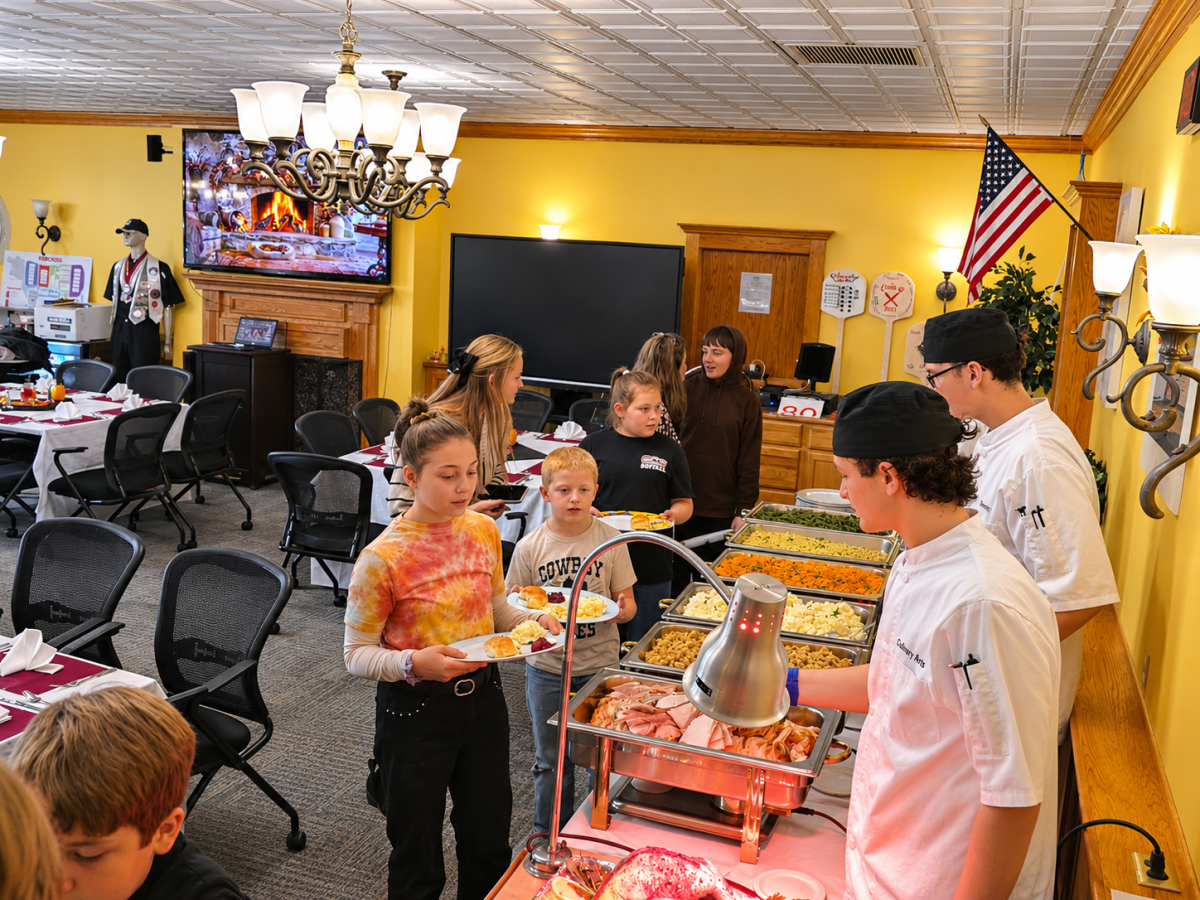
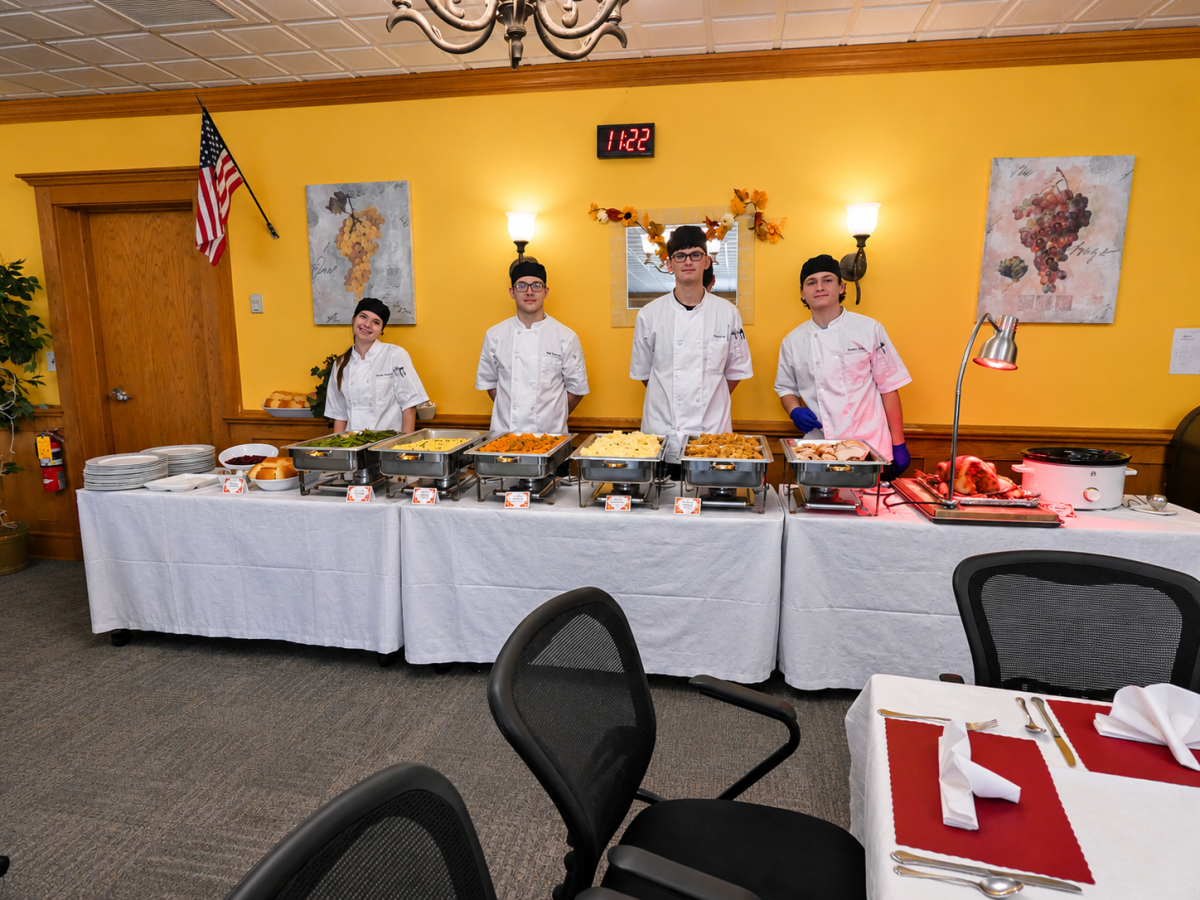
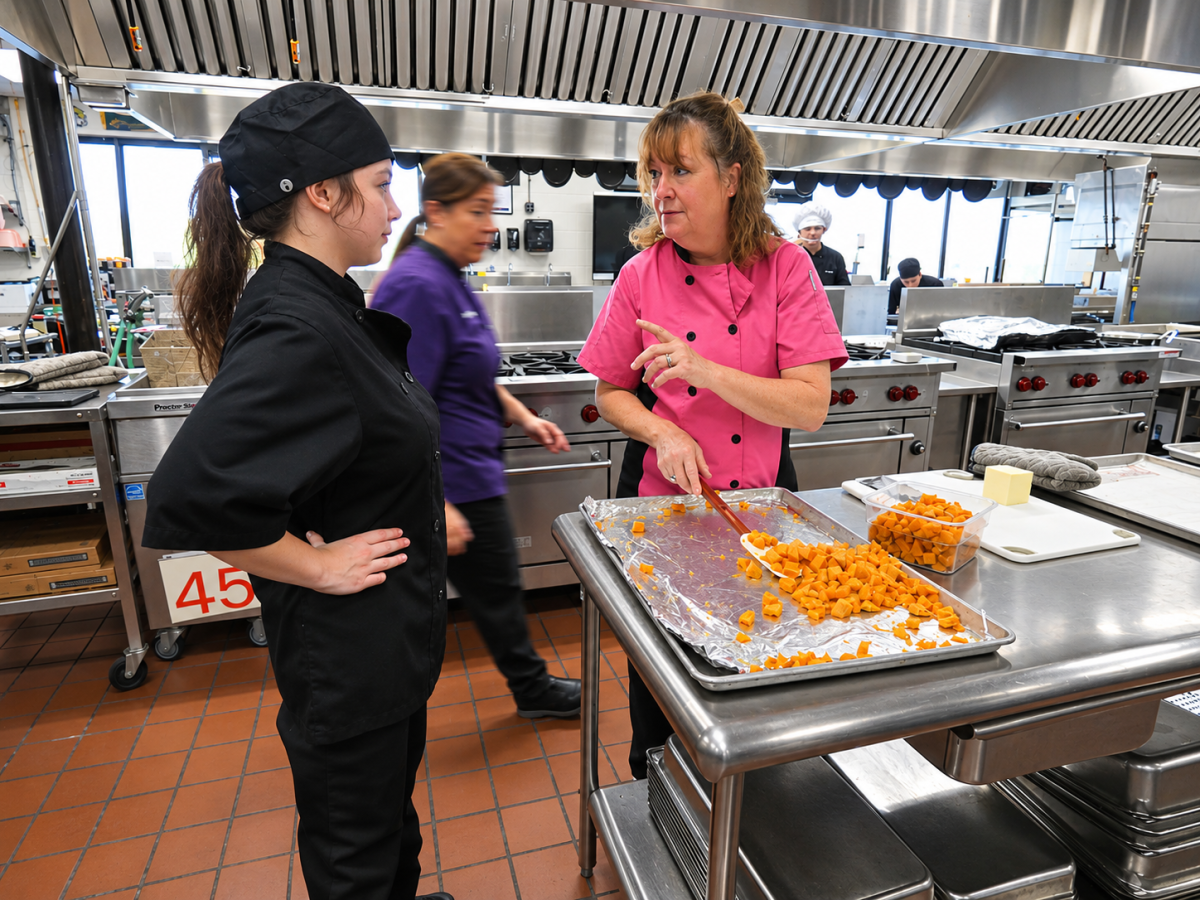
"Get a bench scraper and try and scrape it out, if not put some water in it and let it soak." Jody Albano's voice cuts through the background music and rustle of pots and pans in the huge gleaming kitchen. "YES CHEF!" responds several student chefs in black chef jackets and black skull cap chef caps, which are the usual style for line chefs. There are two levels of students from seven school districts, Juniors and Seniors. Today, they are making their first luncheon of the year for the students at BOCES. It is a traditional Thanksgiving Feast and I am in the process of seeing them pull off a meal and service of which any restaurant in New York State would be proud.
A Senior is taking a dish out of the oven. "What temperature should that be?" Chef Albano calls to him. "I don't know, Chef!," he responds. "Juniors! Tell the senior what temperature that should be!" Several younger student members of the kitchen staff call back, "140 or higher, Chef!" There is no shaming or laughter. Rather, there is pride in a joint learning experience.
"These kids aren't professional chefs yet, and we certainly don't expect them to know everything," Albano explained. "But that doesn't change our end goal. Our guests deserve a wonderful meal and a wonderful experience. The students have to figure out how to make that happen, and our job is to give them the tools, knowledge, and confidence to succeed."
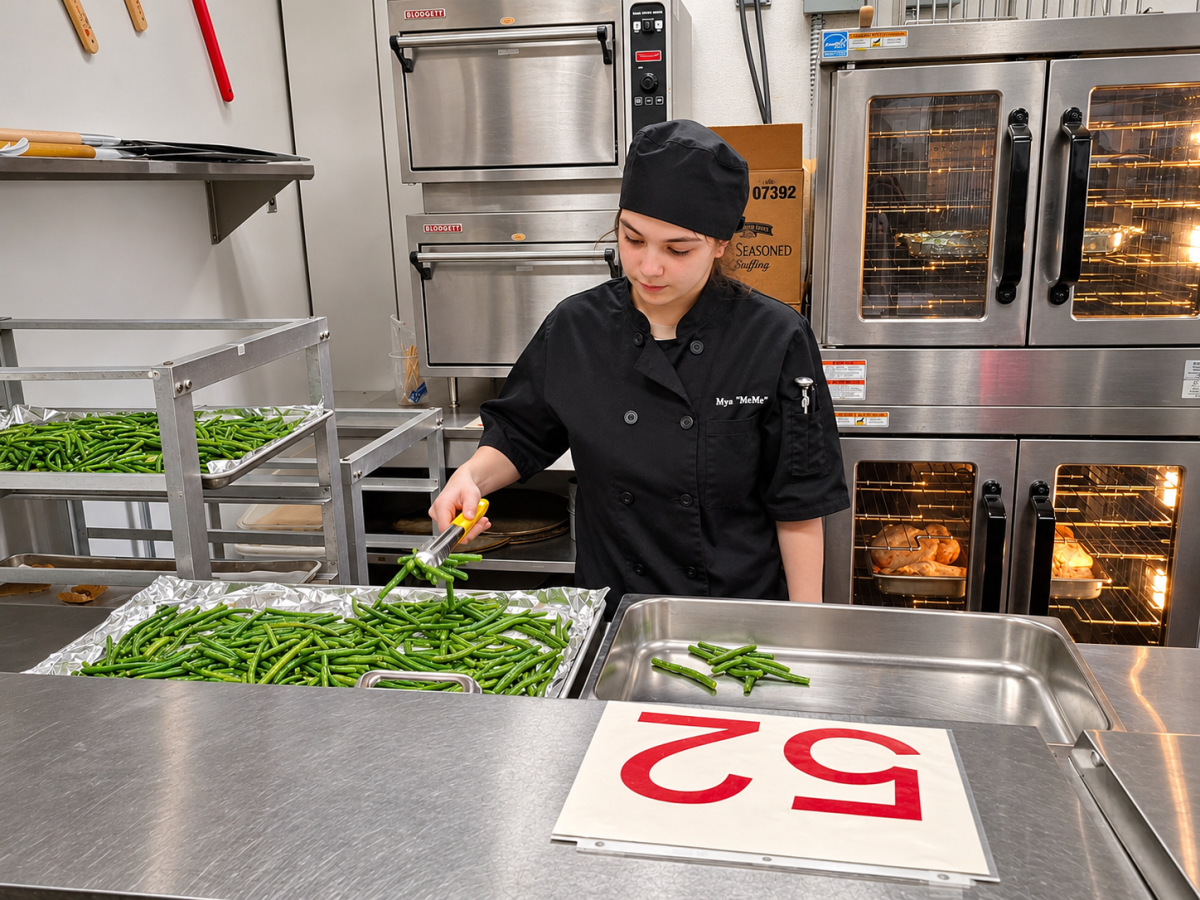
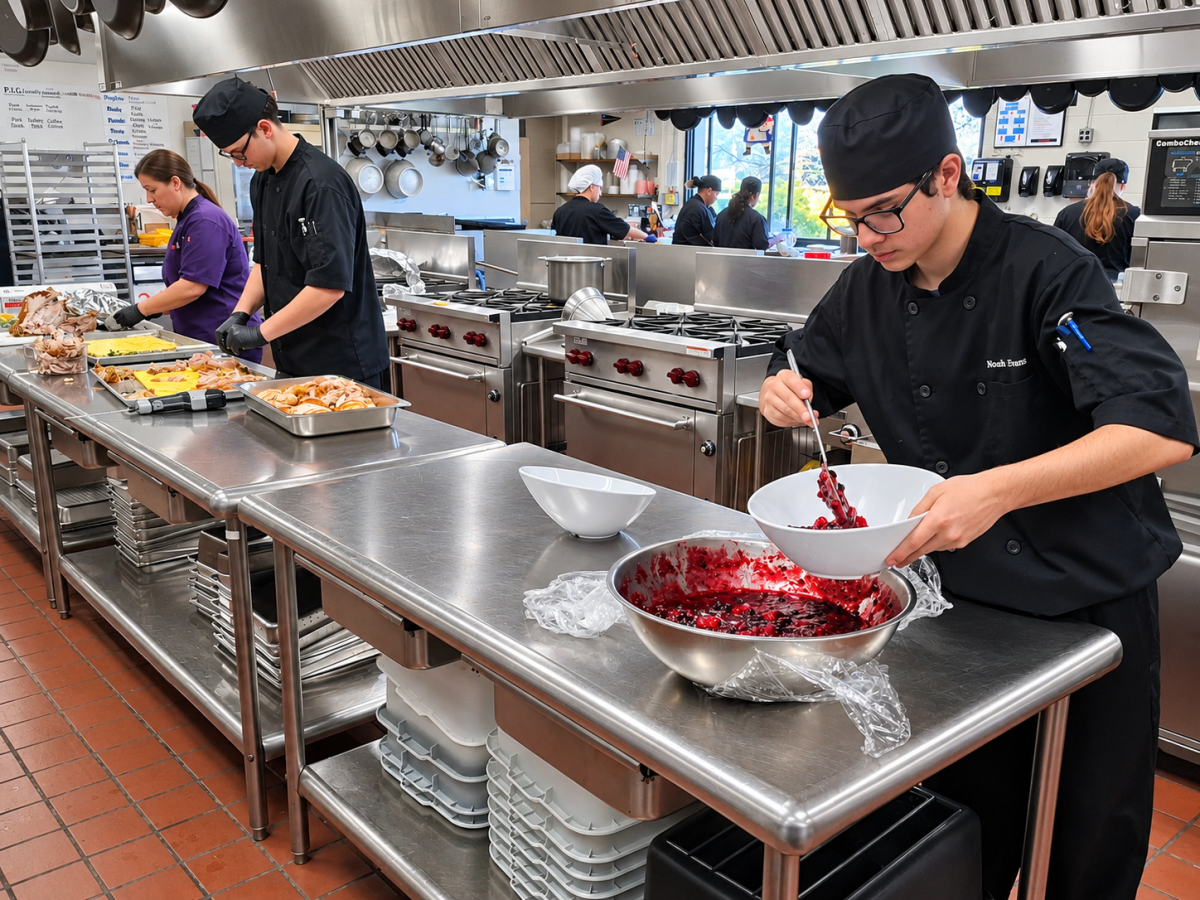
Teams of young people are moving about the kitchen and dining room preparing several styles of turkey, potatoes, sweet potatoes, stuffing, string beans, gravy, and desserts. There is a sense of joy and pride in their work, confidence and camaraderie . Assisting Jody is Vesti Johnson, a teaching assistant. She shows student chefs how to open a steam tray without condensation falling on the table cloth.
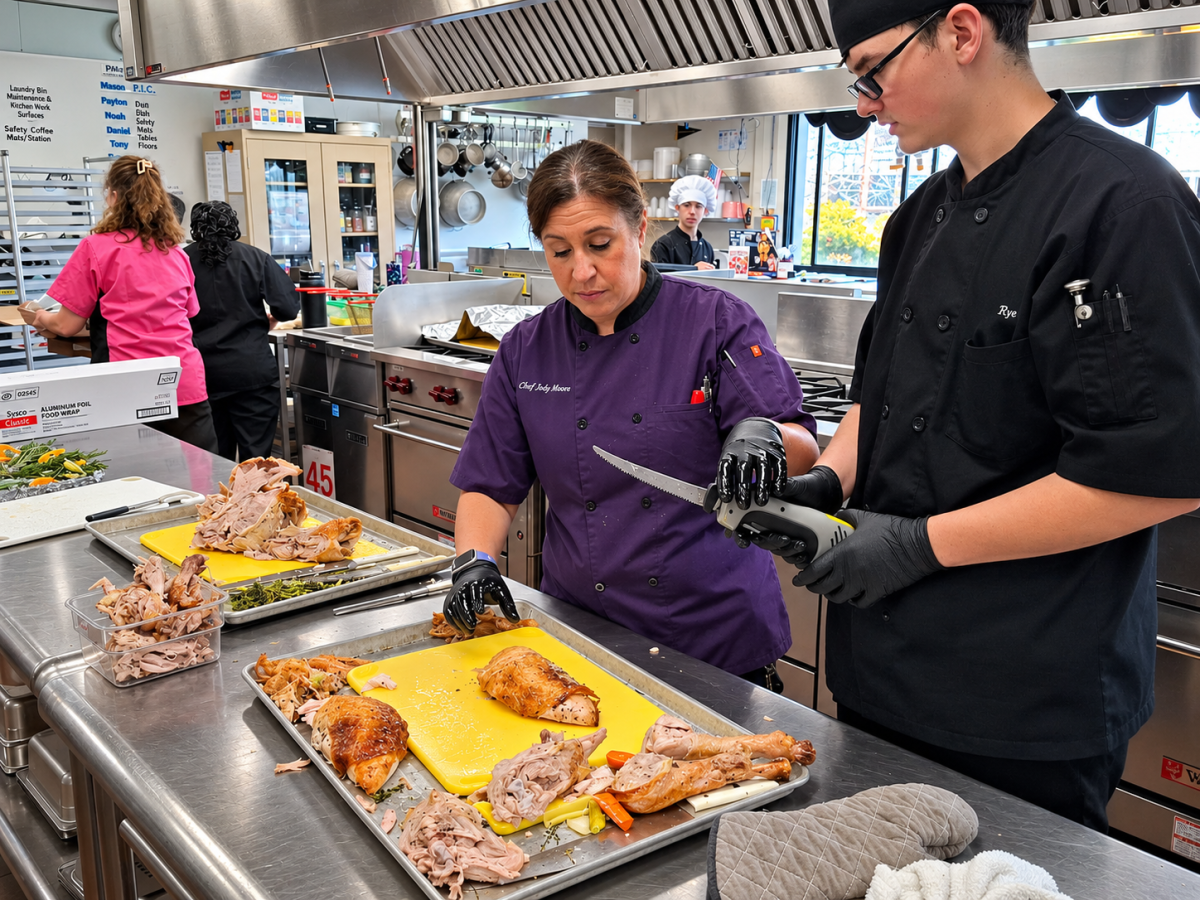
The students are not passive learners. Jody tells me that one student asked how to spatchcock a turkey. In this manner of cooking, the backbone is removed before cooking the bird, flattening it out to promote faster cooking with crispy skin. Another student wanted more moisture and Chef Albano had them also prepare brine soaked turkey. I watched as Chef Albano guided the students through carving each kind of turkey preparation, pointing out to seniors where the joints and bones lay, and how to gently remove the meat in whole pieces from the bones.
Jody teaches the students the science of preparing food. Making a pie dough is more than following a recipe, it is learning the way the ingredients interact, so that the student is understanding and in control of the outcome. The same is true of gravies. She has the students learn how each element works, the fats, starches, liquids and thickening agents so that they become a palette for the artist chef to create a gravy that is the product of planning, not rote learning. This is true of learning the science of making everything from yeast rolls to vegetables. "People see the finished plate, but they don't always see the hundreds of little lessons which took place to get that food onto the plate," Chef Albano explains.
Nate Jones, ONC BOCES Assistant Superintendent for Student Services & Professional Learning, explained how career and technical education (CTE) brings the Portrait of a Graduate (POG) to life by connecting academic knowledge with authentic, hands-on experiences. Students apply math, science, literacy, and technical skills while developing critical thinking, communication, collaboration, and problem-solving abilities. Through projects, presentations, demonstrations, portfolios, and work-based learning experiences, students have multiple opportunities to showcase what they know and can do. These experiences allow students to demonstrate their growth in meaningful ways while preparing for success in college, careers, and their communities.
Chef Albano reflects this POG approach to learning. "For this event, they had to calculate food quantities for approximately sixty guests, increase recipe yields, measure ingredients accurately, convert measurements, determine cooking times based on the weight of individual turkeys, and coordinate multiple recipes so everything would be ready for service. They also had to consider portion sizes, inventory, food costs, and how to minimize waste. Science was equally important. Students explored how heat transfers through food, how proteins change during cooking, why yeast causes bread to rise, how starches thicken sauces, how fats affect pastry texture, and why precise temperature control is critical to food safety.
Reading comprehension and communication skills were put to the test as students interpreted recipes, followed multi-step instructions, reviewed production schedules, and communicated with their teammates. We aren't just teaching students how to cook; we're teaching math, science, reading, communication, organization, time management, and problem-solving. The difference is that our students get to see why those subjects matter. They're not just solving a math problem on a piece of paper—they're using math to figure out how much food they need to feed sixty people. And unlike a traditional classroom assignment, the consequences of mistakes are real and immediate. If a student miscalculates a recipe, the final product may not turn out correctly. If the production schedule isn't followed, dinner may not be ready on time. If proper food safety procedures aren't followed, guests could become ill."
This is not simply a trade school approach. Certainly, a student may go from this start into a job in any professional kitchen and one day run or own one. But, by getting high school and even college credits in the program, they may also go on to university, majoring in food science, or as many have done, find undreamed paths in college.
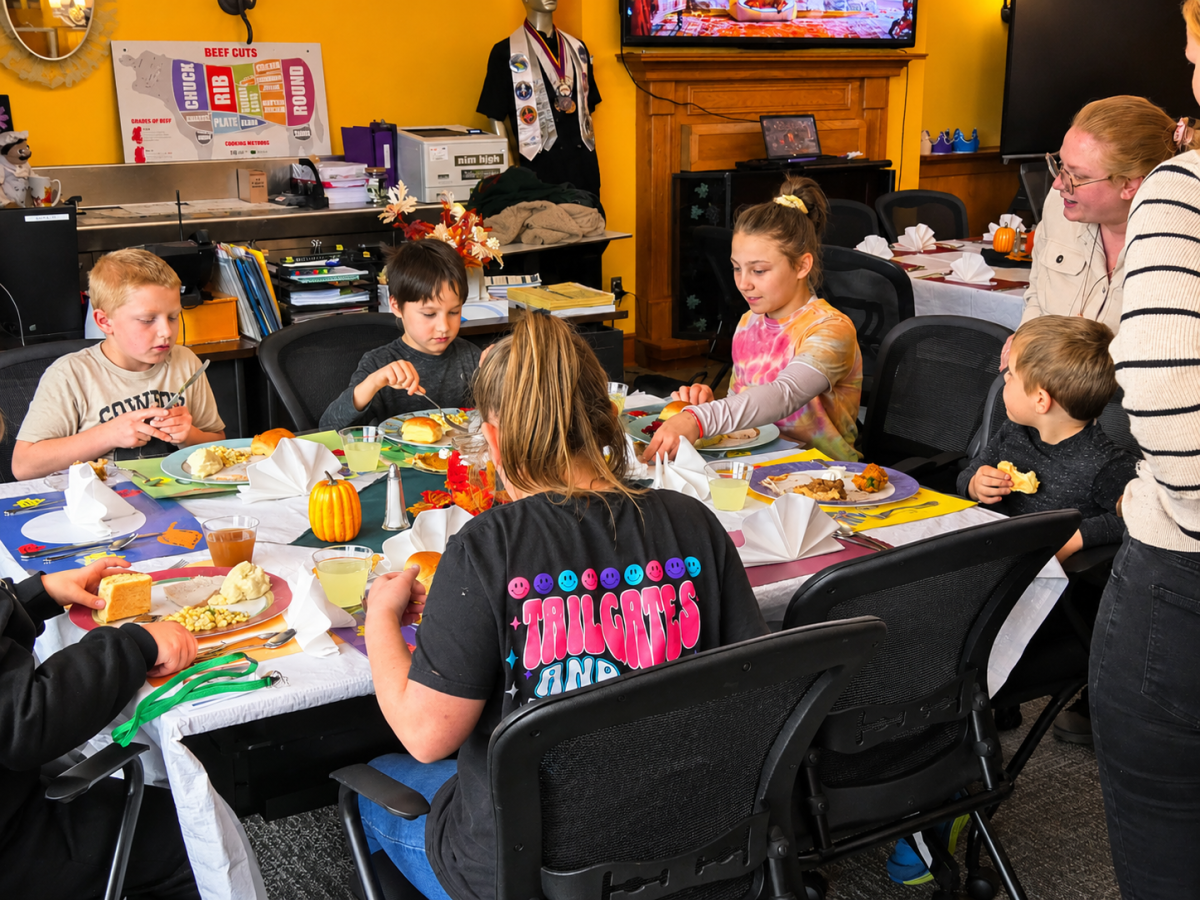
The diners were a delight. The children ranged in age from elementary to middle school. They come from a diverse range of economic and family backgrounds. They were polite, well behaved and respectful to the student servers from the restaurant classes, and this stranger among them with questions and a camera.
I asked the youngest how they liked the meal. I received energetic responses and thumbs up. One youngster rated the meal, "I give this meal a one thousand!"
Erin Reed, MS, Elementary School Counselor - Northern Catskills Occupational Center (NCOC), part of Otsego Northern Catskills BOCES (ONC BOCES) describes the work of the program, "Our social emotional learning committee mission is to build a sense of community within our building here at NCOC. We do that in many ways throughout the school year, with activities that are geared towards building students' awareness of themselves and themselves in relation to others, their ability to manage themselves, and to make responsible decisions. Every month our committee has a theme and we do fun activities for the students. Our students have been surveyed many times and we can tell that they are always most satisfied when there's some sort of food or surprise snack involved! So for our theme this month, which is gratitude, we partnered with chef Albano and chef Vesti Johnson and the culinary program. They have come up with an amazing luncheon for our students where we will be able to practice gratitude as well as sitting down for a meal with your school family. That allows us to model and practice self management, self-awareness, and ultimately have fun and build a sense of gratitude within."
I asked Nate Jones about the staff at BOCES. I notice how supportive they seemed towards each other. The work can have its difficult moments, on days less joyous than today. He agreed and said the work environment is remarkably supportive. It was clear even to a casual visitor.
I would add that this part of the Catskills has much for which to be thankful this season, in Chef Jody Albano, her remarkable students and the children and staff at BOCES.