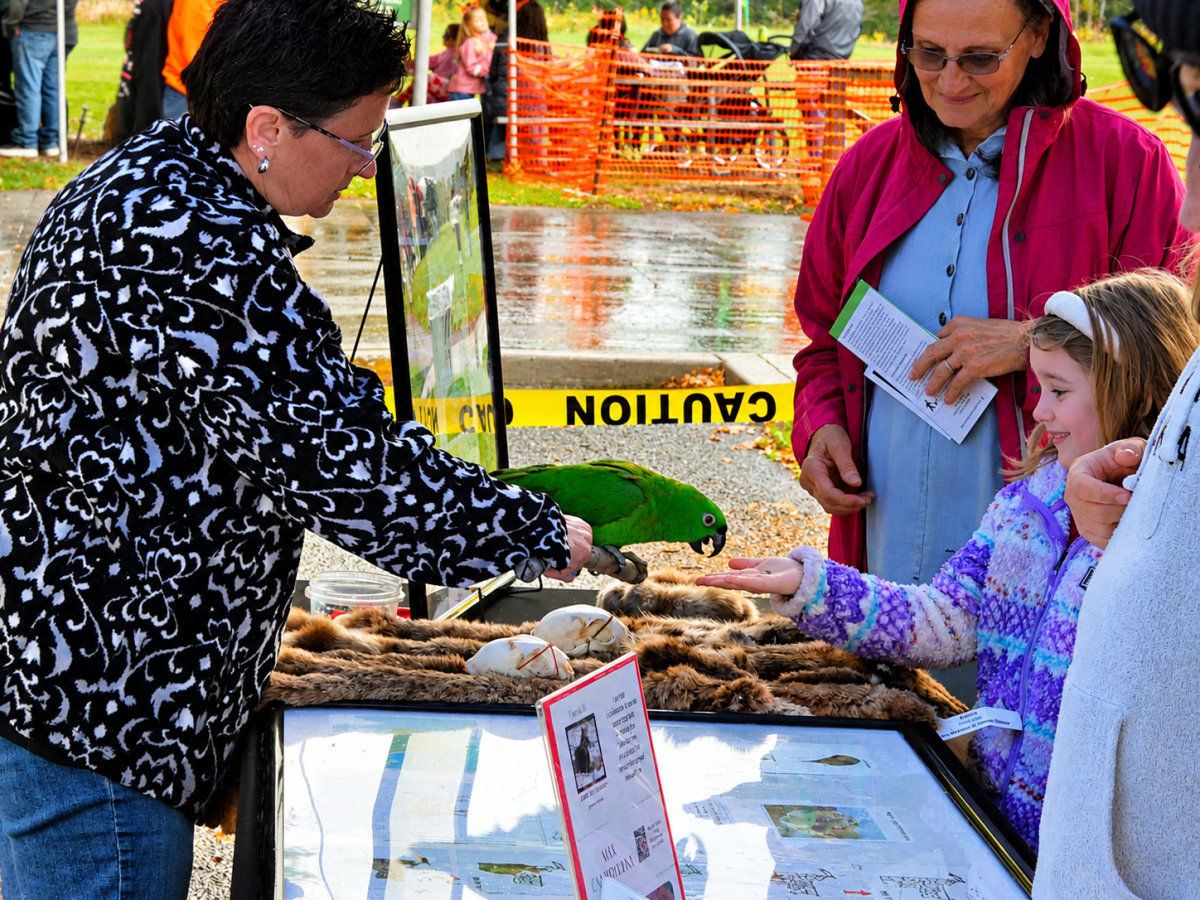
NORTH BLENHEIM — There was a zoological field day at the Blenheim-Gilboa Mine Kill State Park. It was, of course, the 2026 Wildlife Festival. A yearly event which brings families back year after year. There were many animals from around the world, in and out of cages, some to be held or petted, others to keep fingers away from beaks and mouths. It took place in weather which drifted from heavy mist to rain, but it was well attended, and no one seemed to mind the wet.
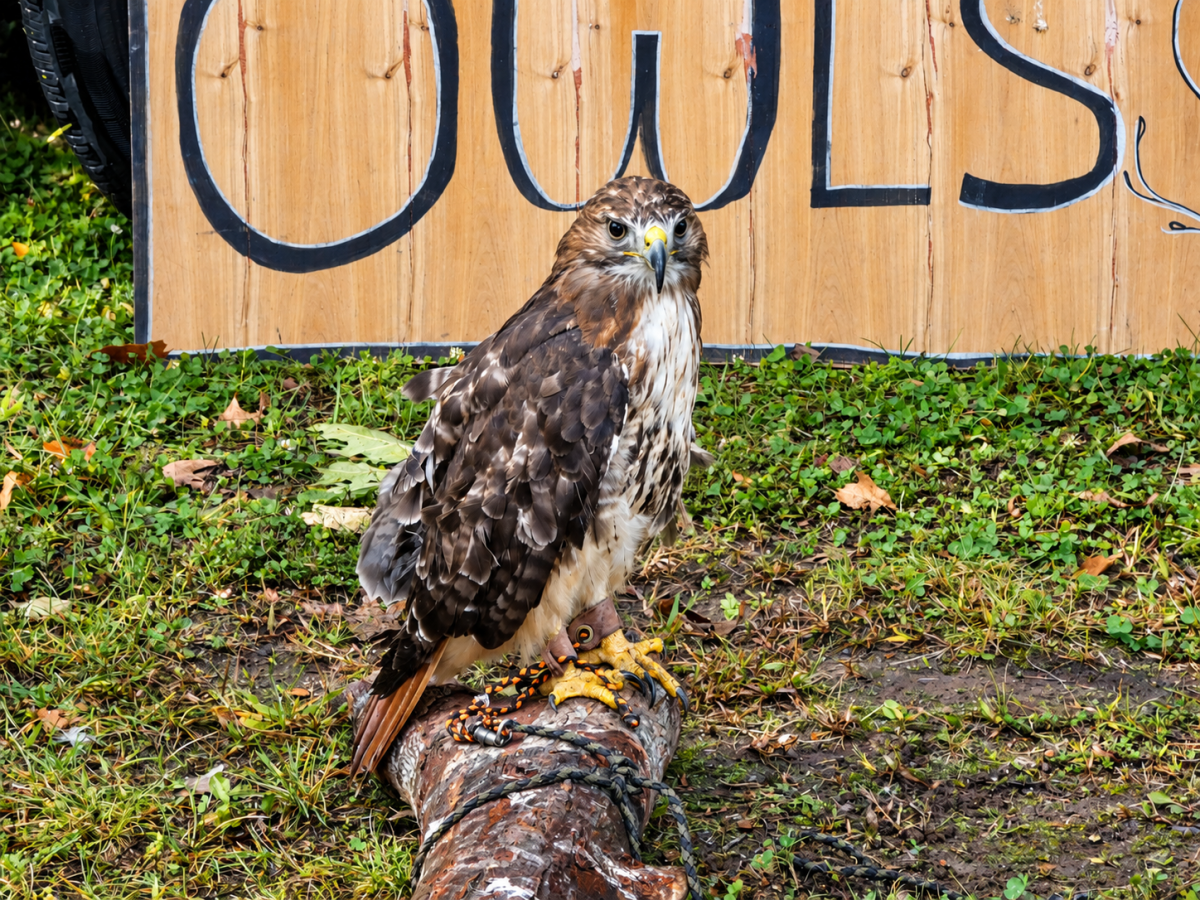
One of the first exhibitors I met was Wes Laraway, of the New York Wildlife Rescue Center. They have a number of raptors, standing patiently looking at us in the misty rain, or in the case of the owls, looking out at us from small open boxes. Wes spent many years as a teacher. He told me he had a student named Matt Avitable. A common enough name, I thought, should I mention... "He's the editor-in chief of the Mountain Eagle now.," Wes says. Small world. I should tell him, in full disclosure, that he's my boss. The Rescue Center rescues over 500 animals a year of all kinds. "We don't just do birds of prey, we do anything wild. From Chipmunks to Bobcats, we only take the birds of prey out with us [to exhibitions such as this one]. These birds are presently unreleasable, they are permanently disabled. Anything that we are going to put back in the wild, stays home. So these guys are our wildlife ambassadors, that go out with us, places."
And great ambassadors they are, peregrine falcons, red tailed hawks, vultures, all that you often see in the Catskills at some distance are here, a few feet from us, turning away to ignore us, or looking us up and down, in raptor judgment. It is important that these avian ambassadors visit the public as the Rescue Center gets no State or Federal Funding. So such events and donations are the bread and butter that keeps the rescued on the road to recovery or in care and comfort if they cannot fend for themselves.
It takes a village to care for these little ones. That village has to kick in over $50,000 a year to provide them with the food and facility that is the foundation of their care. The greatest part of the budget goes to food for the rescued.
Looking at these impressive birds I recall a time when you had to go to Alaska to see Bald Eagles. With the banning of DDT, they have returned in great numbers to New York State and our region in the Western Catskills. However today, the raptor population is endangered by Brodifacoum, Bromadiolone, and Difethialone. These anticoagulant drugs enter the Raptor population when they eat poisoned rodents. There is legislation pending, the New York State RAPTORS Act intended to limit the use of these poisons to protect our great birds.
Wes tells us that the odds are already hard on a large bird's chance of survival. "70% will not make it through their first year. If they make it through their first migration, they may live 8 to 12 years in the wild. In captivity they will live to be 30 or 40 years old." Now that DDT is no longer a challenge to the eagle population, the new concern is lead poisoning. Wes says that almost every eagle is suffering from some degree of lead poisoning in this region today. The source is lead ammunition. Wes tells us that there are alternatives, steel, copper or plastic rounds. "It costs more, sixteen or seventeen cents, isn't that worth a bald eagle?" A turkey vulture raises his huge wing. Wes points to part of the wing that is missing. "That was a thirteen year old unsupervised kid with a gun, a bad combination."
"Tell me about 'Big Blue,'" I say to Eva, of Uncharted Wild. She is holding a large lizard. "He's our blue tongued skink, he comes from Indonesia." She explains they have more browns and blacks in their colorization to adapt to the environment, whereas their Australian cousin's colors fit their environment. Under the awning of the Uncharted Wild exhibit is two year old Hunter, from Gilboa. He is here with his grandmother, who brought his mother to this yearly event when she was a child. Hunter now loves lizards and snakes, getting to know them up close as a youngster.
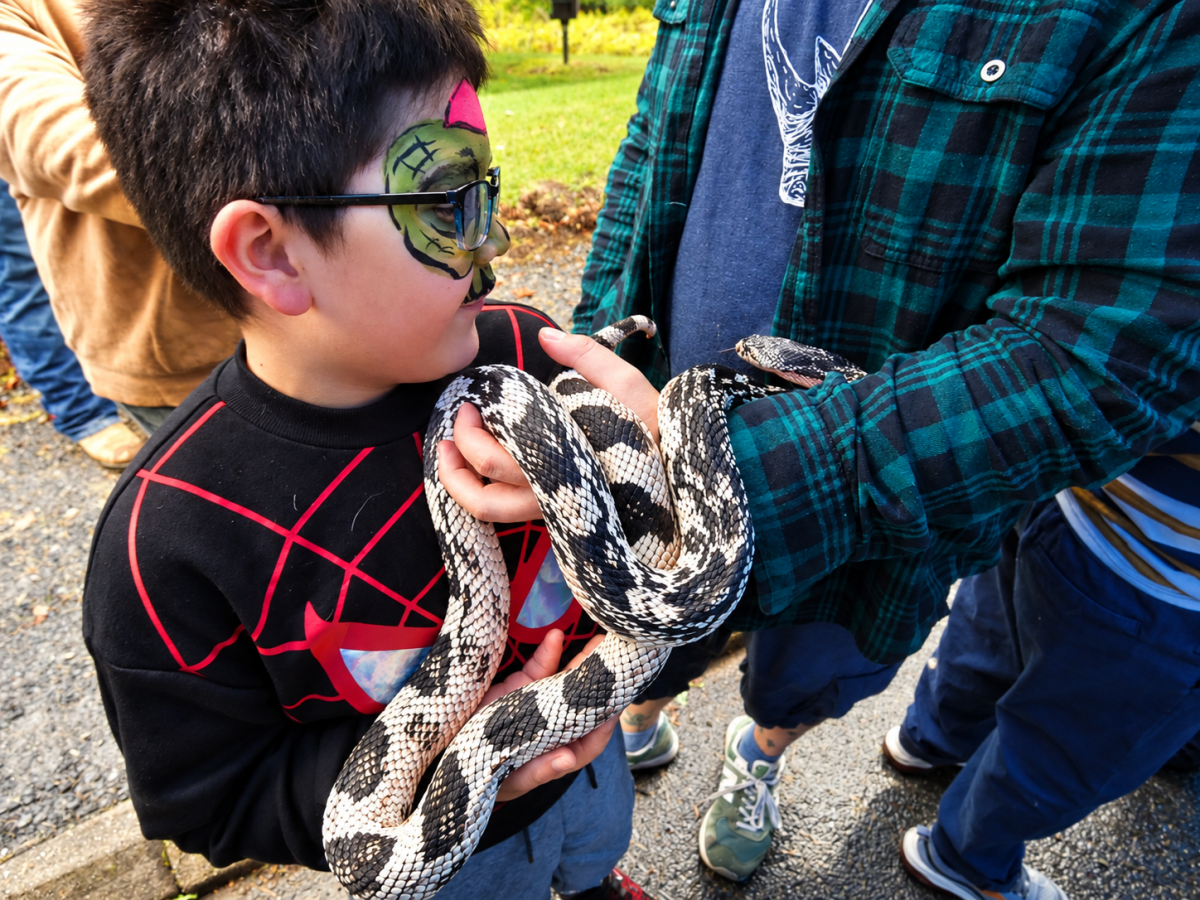
Uncharted Wild is owned by Adam Bornt. He has 80 exotic species he brings to libraries, birthday parties, schools, and summer camps." I teach people about critters you don't see in your backyard," Adam explains as he holds his friend "Spike" a northern pine snake. He lets the children pet and hold Spike with careful supervision.
In the next exhibit, Hudson Valley Reptile Rescue, located in Saugerties, NY, guests are welcomed by Randolph Duncan. A young fellow from Richmondville is talking to him with some knowledge beyond his years about the reptiles in the tanks. "Do you have reptiles of your own?" I ask. He tells me he has a pink tongued skink. The organization Randolph works for, takes in rescued, abandoned or confiscated reptiles.
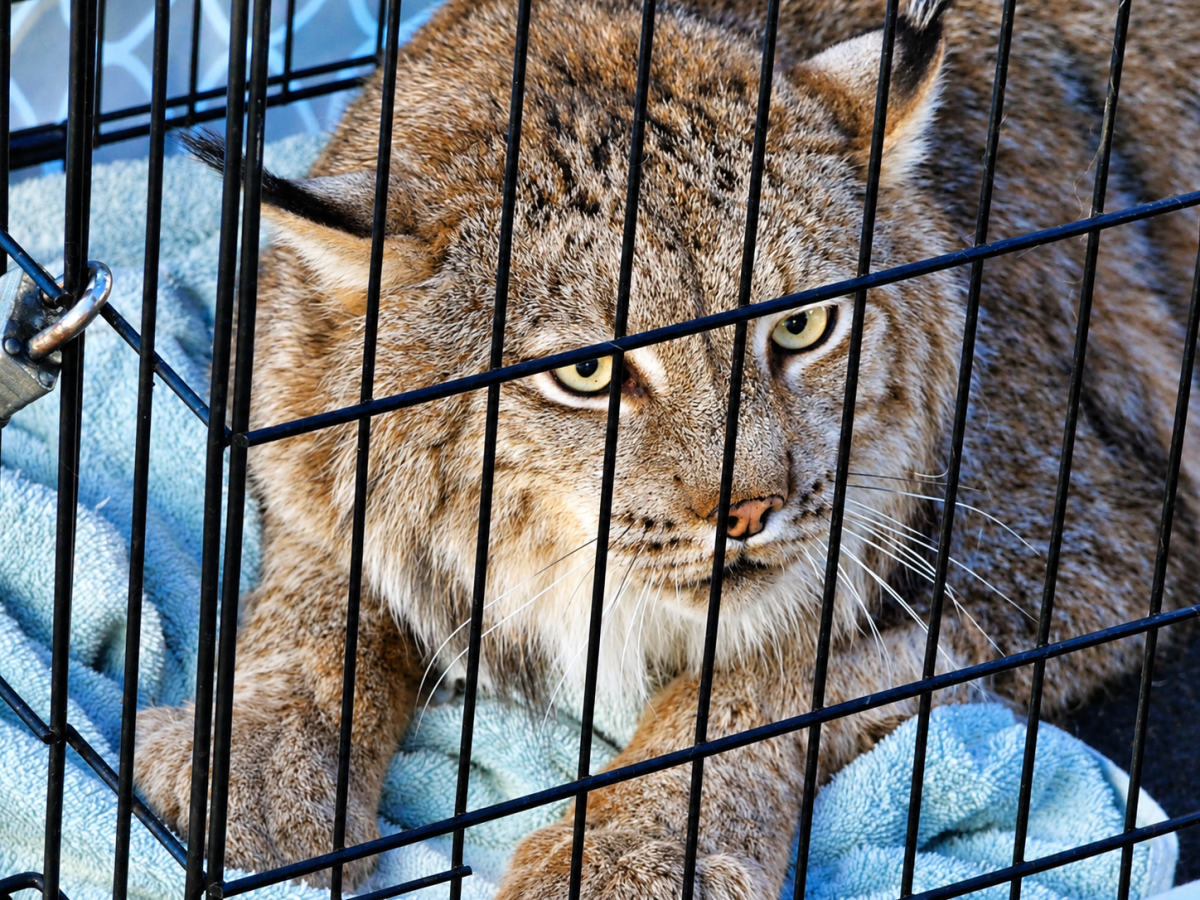
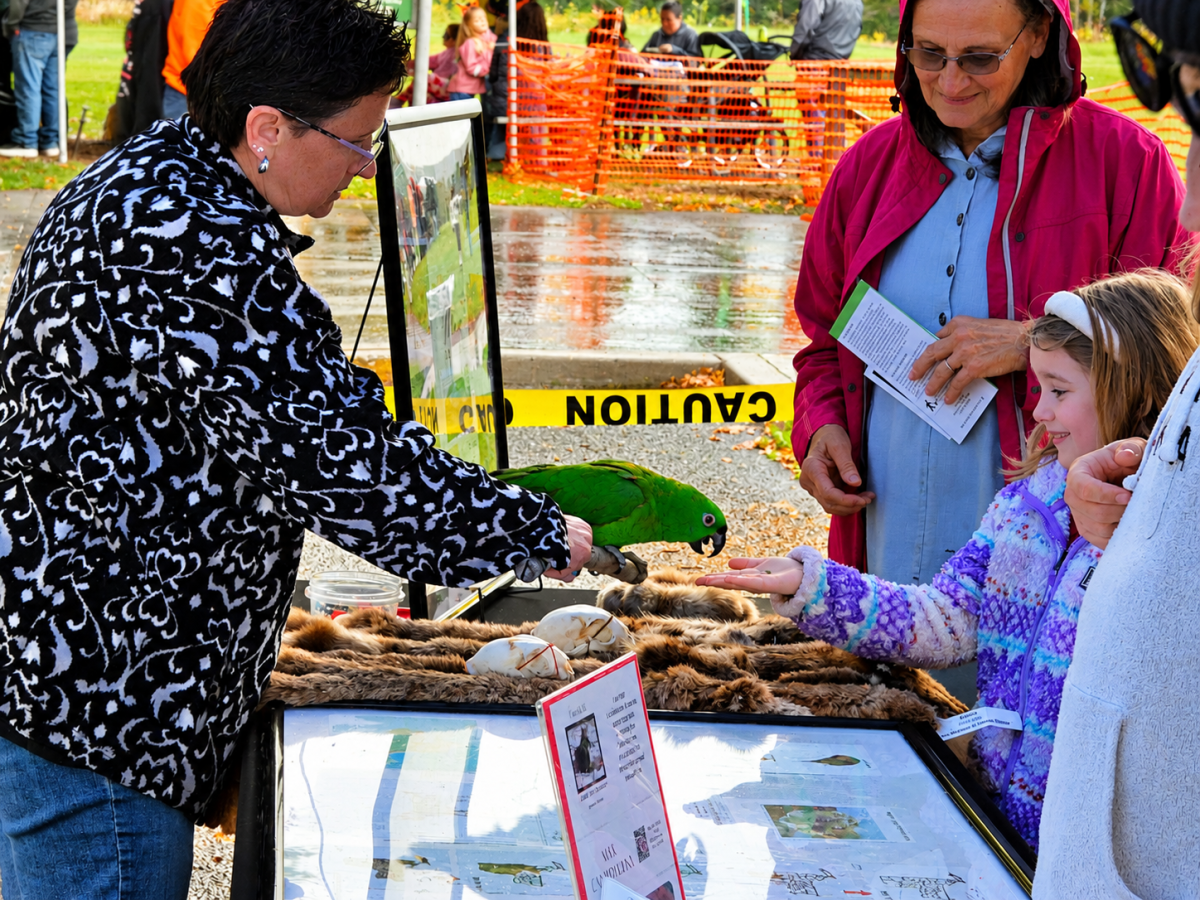
There is a large lynx, he is comfortably ignoring the folks looking at him. He has been doing this for fifteen years, with his human friend Bernadette J. Hoffmann, since he was a seven week old cub. "He pretty much sleeps" at such events. Bernadette was a zookeeper in 2003. The zoo closed in 2008, so she became an independent wildlife educator. She teaches about wildlife, mostly in libraries, but also visits festivals, and schools, resorts, senior centers, childcare places. "We roll in with three animals and things for kids to touch." She has a lynx, a parrot, two chinchillas, a Holland Lop rabbit, a hedgehog, a ring-necked dove. We talk about the lynx which occasionally come south from Canada into Vermont, and the growing number of hybrid wolf/coyotes and beavers. It is all about balance these days as we try and bring an understanding of our relationship with our animal neighbors.
The Wildlife Festival certainly helps create the familiarity that leads to understanding and finding balance. To help the work of the New York Wildlife Rescue Center you can go to their web page at: www.NYWildlifeRescue.org.