

Paul LaPierre - a self-confessed and proud of it “railroad nut” - will be your guide for a May 23 “Rails on the Escarpment” hike. The train set is a replica of the station and yard in 1899 at what is now the Empire State Railway Museum in Phoenicia where LaPierre is vice-president.
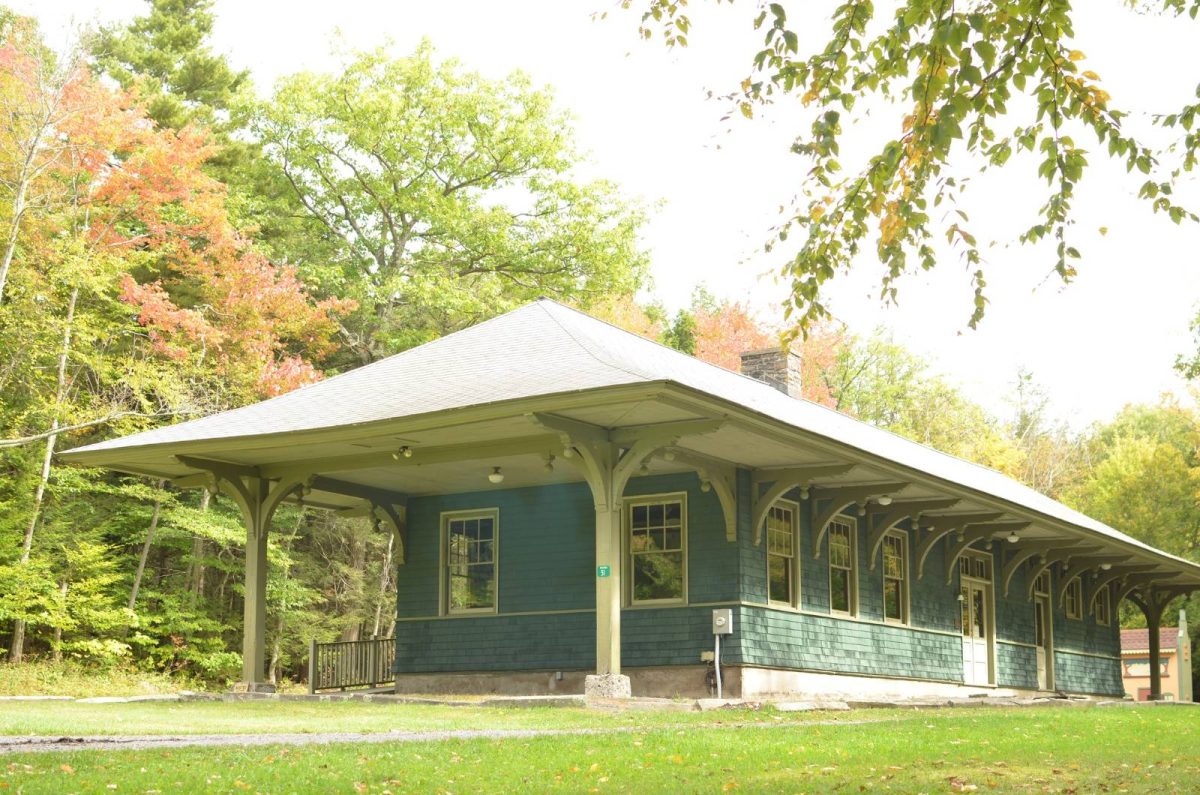
The abandoned but not forgotten Haines Falls railroad station, built in 1913 as part of the Ulster & Delaware and Stony Clove & Catskill Mountain lines, now serving as home base for the Mountaintop Historical Society.
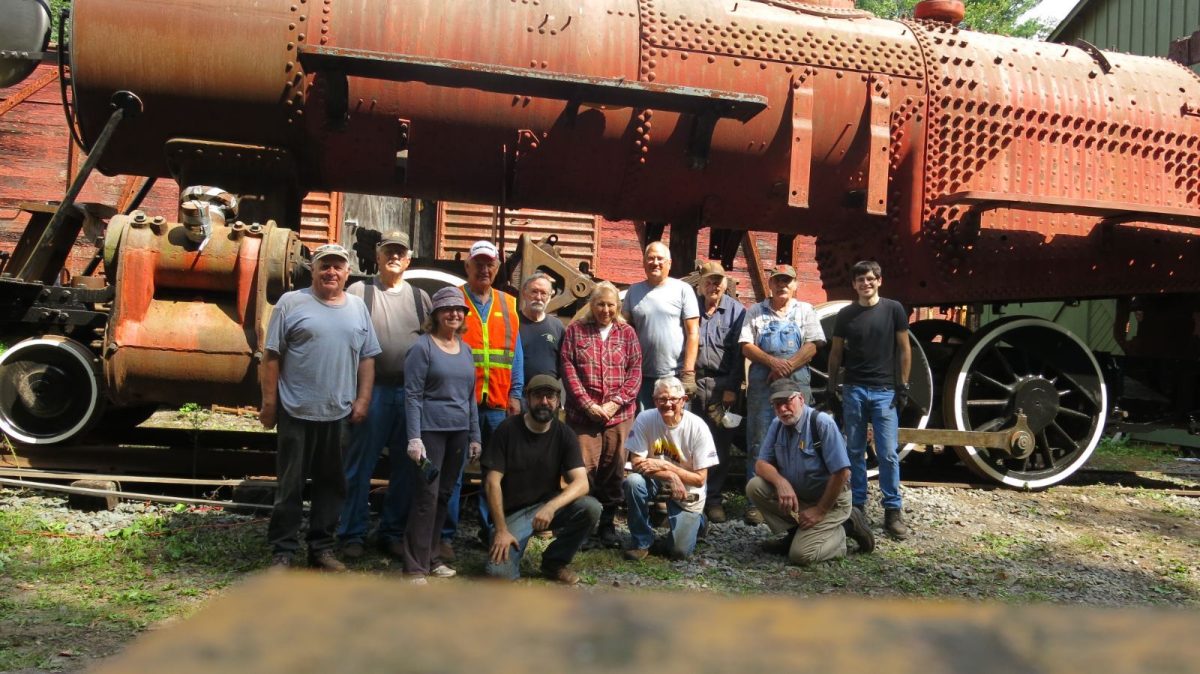
There is nothing like an antiquated steam locomotive to get a work crew fired up including railroad lovers like Paul LaPierre who is helping restore a wooden caboose.
JEWETT - There is an interweaving maze of old railroads Paul LaPierre will be untangling that, in their heyday, interconnected the mountaintop and linked the surrounding Catskills to the rest of the world.
LaPierre is your engineer for a “Rails on the Escarpment” hike, May 23, from 10 a.m to 1 p.m., with no charge for a ticket.
The 2.5 mile sojourn will explore the histories of the Stony Clove & Catskill Mountain, the Catskill & Tannersville and the Otis Elevating lines from the 19th and early 20th centuries.
“These long gone railroads once brought thousands of travelers to the resorts of the mountaintop, especially to the famed Catskill Mountain House and Hotel Kaaterskill,” says LaPierre, a Jewett town resident.
He will be joined by Hunter town historian DeDe Thorpe, giving reminiscent glimpses into the golden years of those summer getaways and others.
The story of the three selected railways starts at the Hudson River and the arrival of ferries packed with city folks seeking peace and quiet, albeit accompanied by eating and sleeping resplendency.
Boats docked at Catskill Point, and packed railway cars would chug toward the high hills and Palenville, the Cairo Junction, Oak Hill and…
Hold on a minute. The Stoney Clove & Catskill Mountain line steamed its way toward the base of the mountain, where Otis Elevating was ready to roll and catenate with the Chattanooga Choo Choo…
Wait. That can’t be right. Rather than an addle-headed reporter confusing matters, LaPierre can steer you to the facts, explaining which lines went where and stuff like changes in the standard gauges of railroad tracks.
“I’ve had an interest in trains since I was a kid,” says LaPierre, who these days is vice-president of the Empire State Railway Museum in Phoenicia.
Growing up on Long Island and in Colorado, “I had the typical Lionel train set,” LaPierre says, sadly not saving any of the classic electric toys.
“When I was seven years old, I remember going back and forth from New York to Colorado with my family, getting to ride on the Denver Zephyr,” an elegantly famous stainless steel streamliner.
It doesn’t take much for LaPierre to launch into the history of local railroads, a passion he will be sharing, next weekend, a guided tour slated to last three hours “depending on how much talking I do,” he says, laughing.
“The railroads were very important on the mountaintop in their day. In 1913, just before World War I, there were forty trains a day in Haines Falls.
“World War I was the turning point. The railroads were nationalized and after the war, there were major improvements to roads,” LaPierre says.
“Dirt roads became macadam. There was a proliferation of automobiles and trucks. People didn’t have to go where railroads went anymore.
“World War II was the death knell for a lot of them. They’re starting to come back now.,” LaPierre says, hauling freight in containers that can be easily transferred to trucks for localized transport.
His passion for the Iron Horse Era, “is hard to explain,” LaPierre says. “I am old enough to be mechanically oriented rather than digitally. I like belts and pulleys, steam and levers.”
A talented woodworker by trade, “I’m working at the Museum on a 100-year old wooden caboose that used to belong to the Delaware & Hudson Railroad out of northeast Pennsylvania,” LaPierre says.
There isn’t much remaining from the premier decades of railroads in the Catskills beyond a few remnants and the Haines Falls station that now serves as home base for the Mountaintop Historical Society.
The hike begins in the parking lot at the south end of South Lake in the North-South Lake Campground, part of the Catskill State Park.
From there, hikers visit the site of the small rail yard where a number of artifacts remain after the removal of rail tracks in 1940.
Anything that can be seen and touched will be unveiled during the May 23 hike. To register, email mthsdirector@mths.org or phone 518-589-6657.
Space is limited, and meanwhile, “the thing I’m big on is broadening interest in the influence of railroads on developing the mountaintop community,” LaPierre says.
“In 1899, rail traffic was so intense the Ulster & Delaware needed to have bigger locomotives, bigger coaches. But the narrow gauge rails could no longer service them, so…”
